Tag: Buddhism

Everything Changes

[I said to Suzuki Roshi,] “I could listen to you for a thousand years and still not get it.  Could you just please put it in a nutshell?  Can you reduce Buddhism to one phrase?”…He was not a man you could pin down, and he didn’t like to give his students something definite to cling to. He had often said not to have “some idea” of what Buddhism was.  But Suzuki did answer.  He looked at me and said, “Everything changes.”

~David Chadwick

For the past 24-hours, here in Pittsburgh we have been bathed in the light of the sun through clear blue skies. I feel the sun in the fluids of my body and, all of a sudden, my dreams seem possible.  When you live in a place that offers shades of gray (and not in the exciting way) for most days of the year, the light of the sun brings profound shifts in conciousness.  This shift is welcomed because it is warm, light and inspiring.  As much as this change in season from cold and dark to warm and light is welcomed, the truth is that at the end of last summer I welcomed the cooler air.  The abundance of heat had become stifling and I desired a shift towards cooler breezes and an internal retreat.  Therefore, it is neither cool or warm that is desired in and of itself, but rather the energetic shifts that come with those changes.

It is curious to me that I can see how these shifts in temperature and light and energies related to the seasons are important to my well-being, creativity and mind-body, but I hold on so tightly to so many things.  I worry about losing things.  I am terrified to lose people, either through death or natural shifts in relationships of all kinds.  My dog is very old.  She is such a sweet and loving soul and sometimes I feel my heart breaking just a little, tiny bit, even while she is still alive and well because I know this can’t go on forever.  My clients are terrified by global warming, their mortality, their mental and physical health concerns.  I feel my own suffering and that of others so deeply.  All of these sufferings and fears are rooted in my inability to embody the wisdom presented by Suzuki Roshi, “everything changes”.  When things are “good”, I am already suffering because I know that they will change and I wish I could hold onto that “good”.  When things are “bad”, I forget that they won’t walways be that way and I identify with that darkness as if it will go on forever.

A few days ago, I was standing outside of a building and a woman appeared who was searching for a medical office, but it seemed like she was at the wrong address.  I had my phone with me and offered to use Google maps to search for the address and see where it was in relationship to where we were and as I searched, she told me a little bit about her story.  You see, she was going to have her second open heart surgery in the next week and she needed to see a dentist before the surgery.  Somehow, she used to have dental insurance, but her health plan was switched without her knowing it and she no longer had insurance.  She was rushing around and trying to get the pre-surgical care she needed and she was upset and scared.  On top of her concerns about her health and having to recover from having her “chest cut open again”, she didn’t know how she was going to pay for the dentist and now she couldn’t even find the dentist that had agreed to see her without insurance. This is not healing.  This woman needed to be cared for, nourished and soothed.  I wanted to sit with her in a calm and beautiful place and help her visualize a healing surgery followed by an uncomplicated recovery.  I wanted to sit with her around lush greenery and nature so that the color of the heart chakra, green, was surrounding her and she could breathe it in. I didn’t want her to worry about the dentist or how she would pay for it or the pain.  It’s so easy for us to become completely absorbed by our own story and our own suffering that we forget that everyone is also experiencing these cycles of suffering.  Everyone.  No matter how much money you have, resources, education, or fancy shoes that match your suits……..it simply doesn’t prevent change.

My students know that I have been working with a gatha (meditative poem) by Thich Nhat Hanh for the past year and I believe it is the perfect way to work with this energy of suffering around change or to release attachment to change that is perceived as beneficial.  This poem brings a sense of equanimity.

Breathing in, I calm my body.  Breathing out, I smile.  Dwelling in the present moment, I know this is a wonderful moment. ~Thich Nhat Hanh

In his book of guided meditations, The Blooming of a Lotus (1993), Thich Nhat Hanh provides this same gatha with breathing instructions for each part of the poem:

  1. Breathing in, I calm my body.
    Breathing out, I smile.
  2. Breathing in, I dwell in the present moment.
    Breathing out, I know this is a wonderful moment.

In short:

Breathing in: CALM

Breathing out: SMILE

Breathing in: PRESENT MOMENT

Breathing out: WONDERFUL MOMENT

I hope you will find this simple poem and breathing practice as helpful as I do in bringing peace and equanimity into this moment regardless of our circumstances.  It is in this state of equanimity that we can also be compassionate to all other living beings as they navigate their changes.

Written by Sharon Fennimore, a yoga and meditation instructor and women’s health coach based in Pittsburgh, Pennsylvania.  Please join my online community MAKE ROOM and learn how to meditate for clarity and peace. I’d so very much be delighted to have you join us!

Imperfect Vessels

I’m always reading.  Whenever I come across common themes in my reading, I try to make note of it and then think about what that theme means to me in my life, my practice and my work.  Two-weeks ago, in everything I was reading, the word or theme of “imagination” kept popping up.  This week, in two completely different books, the Buddhist teaching of the imperfect vessels revealed itself to me.  This teaching provides a way for us to study ourselves and then develop practices that support our current state of mind.

The first type of imperfect vessel is an upside down vessel.  It’s impossible to fill a vase with beautiful flowers if the vase is upside down.  In this type of vessel, the opening is completely closed off.  In this “closed mind” there is no role for meditation or yoga practice.  It is likely that all of us experience times when our minds are the upside down vessel.  It is just as likely that we can think of someone that we know or have been forced to work with or relate to that seems to have a mind like an upside down vessel at all times.  Nothing you say, no workshop, no training, no professional advice, no class—nothing penetrates or makes a difference.  In my yoga classes I never have to worry about having students with this mind-type because just deciding to take a yoga class is an opening—however small that crack or pore might be.  In general, anyone who reads this and thinks to themselves, “Wow!  Sometimes my mind is completely closed off like an upside down vessel.” isn’t the type of person who has a mind like this all the time.  It’s likely you have one of the other types of imperfect vessels that you are working with.  If you read this and think, “I’m never upside down or closed off.”—well, hate to be the one to tell you, but then it is likely your mind is more like an upside down vessel for most of the time than not.  There is a Buddhist sutra that says, “Things are not what they seem to be, nor are they otherwise.” (1)

The second type of imperfect vessel is the dirty vessel.  This is a mind that is impacted by physical body toxins, being psychologically toxic and needing to take steps or adapt a practice with an emphasis on purification.  The dirty vessel pollutes whatever is poured into it.  So, this mind can study all the teachings and practice yoga and meditation, but all the information received is polluted.  Personally, I’ve been thinking about this a great deal because one of my vices is Diet Coke.  Whenever I get stressed out or tired or lonely or sad or just want to choose a beverage to go with what I am eating for lunch, my first choice is a nice bubbly Diet Coke.  Well, this pollutes the vessel.  I can do all the yoga I want, but my body has to work really hard to get rid of the carcinogens, food coloring, blah blah blah……it’s hard to find any enlightenment when you have to work that hard just to get clear.  Part of my personal practice right now is to make other choices that are nourishing and support the qualities of mind that I wish to enhance through my meditation and yoga practices.

The third type of vessel is the leaky vessel.  This type of vessel has some kind of crack or hole in it and it can’t hold what you put in it.  A mind like a leaky vessel is unstable, there are too many distractions and it feels impossible to make decisions.  The type of practice for this quality of mind requires discipline.  Bringing the quality of discipline into one’s life through regular practice of yoga and meditation, no matter what, is a way to work with this type of imperfect vessel.

The fourth type of imperfect vessel is the tilted vessel.  In this type of mind, you receive teachings, but you are unable to maximize your full potential.  If this is the type of mind you are working with, then practices that are designed to help “right” your vessel are what you would work with.  In this case it is more about fine-tuning the subtle body and making choices about including practices that enhance the flow of energy through the chakras, work with sound and subtle body anatomy with pranayama and visualization.

Self-study and considering our quality of mind at any given time isn’t about judgment.  These imperfect vessels give us the tools to consider our quality of mind at any given moment and step-back from our habitual responses to criticism, stress, fear or confusion.  We can observe ourselves and others with curiosity and drop our attachment to specific outcomes or trying to control ourselves or others.  It’s a way to be more open and creative and find solutions to the challenges that we face with equanimity.

This post written by Sharon Fennimore who is offering a series of workshops exploring five Buddhist sutras in translation starting in fall 2015 in Pittsburgh, PA.

REFERENCES

“Things are not what they seem to be, nor are they otherwise.” is from the Shurangama Sutra. 


Benefits of Reading Sutras

This month, I am starting an online course called Radiant Heart and we will be reading a number of Classical Buddhist texts that provide guidance for both meditation and interacting with others that builds our capacity for happiness and joy.  This course is appropriate whether you identify with “being Buddhist” or not as none of the texts ask you to pray to a certain God or believe anything in particular.  Therefore, this course will not challenge your current belief system or commitment to a particular practice of religion.  Instead, the course challenges you to experiment with breathing, movement and mind practices that have the potential to change how you experience daily life.

In the preparation of this course I have come across a relatively new science: neurotheology.  Regardless of what part of this science makes sense to you or doesn’t, it appears that reading religious texts and taking the time to consider ourselves as living beings in relationship to higher power is good for our health.  I don’t know very much about this, but it is something that I am profoundly curious about because of the role that faith, in general, has played in my life.

My goal for this course is to help participants learn how to breathe, meditate and move in ways that create an improved sense of peace and well-being regardless of current circumstances.  Whether you have been practicing yoga and meditation for years or just feel curious, but have never tried to meditate, this course will be beneficial to you.  For yoga teachers, this course has the opportunity to earn 15 CEU credits for maintaining your registration with Yoga Alliance.  Find the complete syllabus, reading list and lecture and office hours schedule HERE.  This is an online course, so you can work at your own pace and all lectures are recorded so you can download the videos and watch anytime.

Course will be accessible on April 3, 2015, but you can register anytime before the course ends in June.  You will have access to the live events and office hours if you start in April, but everything is recorded and available online so you don’t have to worry about being able to keep to the schedule.  Start at your convenience and complete the course at your own pace.

Here is a list of the five texts we will be reading and exploring practices for:

Finding the Breath of the Heart
The Sutra on the Full Awareness of Breathing
Pali of the Anapanasati Sutta

The Heart’s Intelligence
The Sutra on the Establishments of Mindfulness
Satipatthana Sutta

Mindful Heart Practices
The Heart Sutra
Prajnaparamita Hrdaya Sutra

Radiant Heart
The Radiance Sutras
Vijnana Bhairava Tantra

The Sutra on Happiness
Mangala Sutta
Cultivating joy and abundance


NEW Online Meditation Course

CallOut_004

Four Noble Truths: Insights and Meditations

In this five-week online course, we will explore the Four Noble Truths of Buddhism through Phillip Moffitt’s book, “Dancing with Life: Buddhist Insights for Finding Meaning and Joy in the Face of Suffering.”  The course includes guided required reading of this text and instruction in a variety of mindful meditations that help build compassion and insight.  Introductory tuition $25.

You can start the course at ANY time and have immediate access to the first unit upon enrollment.  You have five weeks to take the course from the date you start.  There is no schedule to keep to or required group activities.  Read at your own pace and engage with the videos, worksheets and guided meditations in whatever way is most helpful for you.  No grades.  No pressure.  No requirements.

This course is for you if:tangka

  • You want to feel less anxiety, stress and depression
  • You want to learn more about fundamental concepts in Buddhism
  • You need a flexible program that allows you to work at your convenience
  • You wish to increase your capacity for compassion

This course is for yoga and meditation students of all levels who want to know more about Buddhism and wish to learn metta meditation techniques to either start or refresh a daily meditation practice.  This is an intellectual, personal and shared journey into meditation practices that are inspired by insights related to the Four Noble Truths.  These are secular practices that can be incorporated into even the most busy lifestyle.

Dr. Dean Ornish has described the core textbook for this online course as, “…a profound book about the relationship between happiness and suffering.  It is filled with wisdom about how to live a more effective and satisfying life.  I recommend it for anyone who is struggling with change in their lives.” (From the back cover)

Do you want to improve the quality of your health on your own time, at your own pace and in the comfort of your home, office or local coffee shop or park?
Do you need an affordable meditation program that doesn’t require you to also pay for transportation, childcare, meals and housing?

Are you looking for new inspiration and meaning for your existing practice?  Are you a yoga or meditation teacher that wants to incorporate more meditation in your own practice and your teaching?  

Do not delay!  You will learn simple techniques for relieving stress, tension and anxiety on the very first day of the course—even before you read one word of the core text!

Wanting Mind

Love Letter Thursday 5.16.13
Pittsburgh, PA

On this Thursday, I send you some ideas on the wanting mind.  Rooted in desire, the wanting mind is constantly evaluating what we like, don’t like, wish for and don’t wish for.  Although the world keeps changing right underneath our feet, we grasp with the wanting mind and hope (expect?) that somehow we can set the circumstances in place that will allow things to be “just so” and for as long as possible.  This is, exactly, the idea behind the love note itself.  Or is it?

In Phillip Moffitt’s book, Emotional Chaos to Clarity (which, by the way, I can’t recommend highly enough), he explores the difference between expectation and possibility.  And, I argue that, based on his explanation of the difference between the two, a love note is exciting because it is filled with possibility rather than expectation.  Sure, you don’t expect to open my little note on Thursday and find something mean spirited, but the reason why you look forward to these notes is because anything is possible—will it be a poem, a song, a video, a picture, a……….well, anything is possible really and there lies the joy.  But, if you found yourself really liking the love letters with videos and you opened this and didn’t find a video, well then, you might not be able to truly enjoy this love note for what it is.  In essence, your expectation that your wanting mind’s preference for videos in my love notes, when not met, will cause you to have a bad experience of this note even though it is entirely pleasant.

And, according to Phillip Moffitt, we pretty much do this to ourselves all the time.  We allow our wanting mind to determine what we like and when we don’t get it, regardless of how pleasant the reality might be, it is near impossible to let go of the disappointment and appreciate what is possible.

Wow!

Expectations narrow options, limit imagination and create pressure because you can only have a sense of well being if your wanting mind’s expectations are met.  Possibilities, on the other hand, are a request rather than a demand.  Possibilities are based on what is actually happening in the present moment.  Possibilities allow you to consider that there might be something even greater than what you think you want.

TAKE ACTION

What kinds of expectations has your wanting mind brought to your attention today?  Is there anything you expect that you might be able to release and turn into a possibility?  For example, all day long you look forward to your yoga class because you love your teacher.  Just the sound of her voice makes you feel calm and collected.  But, when you show up for class, you find out that your teacher had to fly back to San Francisco to visit with her sick Auntie and there is a substitute instructor.  Can you resist your urge to pack up your mat and head back out, disgruntled?  Can you turn this expectation into a possibility?  Can you give the present enough time to reveal potential?  Can you, just for a few moments, entertain the idea that you might even like the substitute teacher better than your regular teacher?  Or, maybe you will learn something new?  Or, maybe your experience will simply reinforce your gratitude for having found your regular teacher?

In honor of love letter Thursday, I ask you to challenge yourself to turn one expectation into a possibility and share your experience with the community below.

This Love Letter is brought to you from Sharon Rudyk, a Pittsburgh based yoga and meditation instructor, yoga therapist and doula.  Do you want my newsletter brought right to your inbox every Thursday?  Of course you do!  Well, then sign up here.

Hugger Mugger Affiliate Banner — Medium

Out of Beer?

Benjamin Franklin said that beer was proof that God loves us and wants us to be happy.  But, what happens when you run out of beer?

Matthieu Ricard offers some ideas about happiness in this short talk.  Enjoy!

We Can Be Buddhas

Excellent Ted Talk by Robert Thurman about the ego and that our misperception that what we are is inside our skin.  Short, sweet, interesting and inspiring!

Meditation Series

This fall, Yoga Matrika is offering a 12-week Meditation Series facilitated by Bhante Pema. This is a very unique opportunity in Pittsburgh to study and practice meditation. By making a 12-week commitment, you will start to see the benefits of regular practice over the course of three-months.

Dr. Josephine Briggs, the Director of the National Institutes of Health, National Center for Alternative and Complementary Medicine, says that, “It is now well established that the meditative state can be associated with changes in electrical function of the brain, and recent imaging studies suggest that there may actually be neuroanatomic changes as well.”  In addition, a new study by the Public Library of Science suggests that regular meditation can have a significant impact on stress related illnesses. “The study found that in comparison to a control group of people who had never meditated, a group of regular meditators actually suppressed twice the number of genes that induce stress responses such as high blood pressure and inflammation in the body.Long term effects of the expression of stress-related genes can have very harmful effects on health, including high blood pressure or chronic pain. Those who meditate regularly are thus at a greatly decreased risk for developing these problems.”

According to NCCAM, over 20 million Americans practice meditation for a variety of health benefits. You can find out more about meditation and the types of research that are being conducted now regarding meditation and impact on specific health problems here.

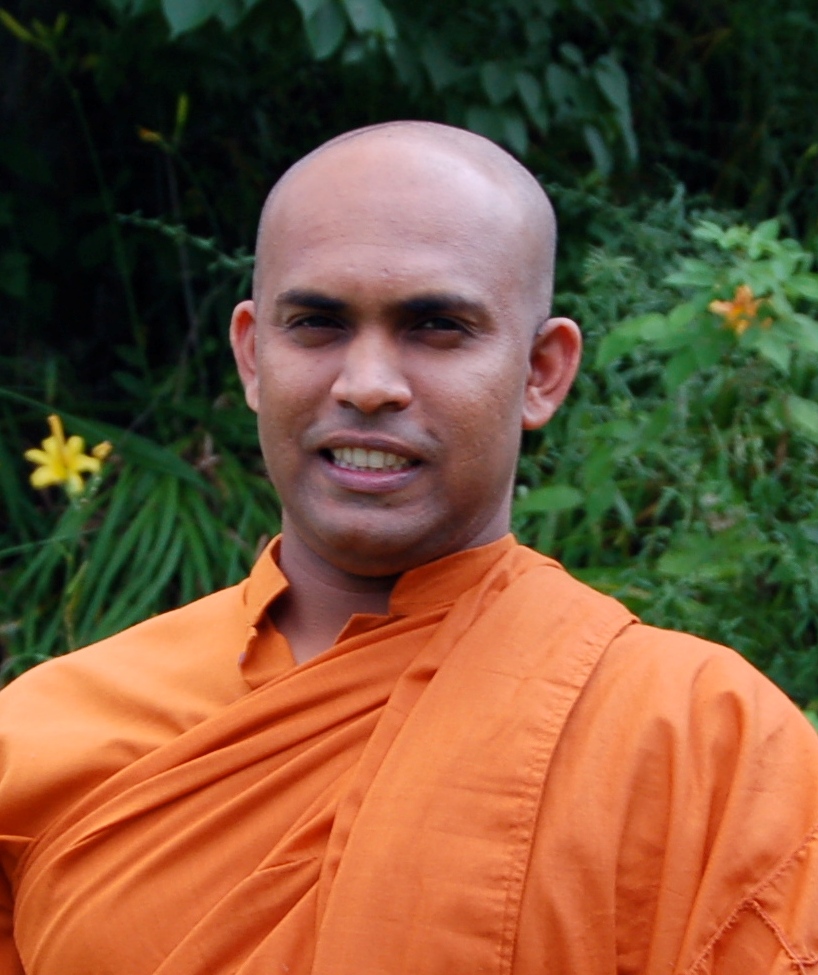
Our course instructor, Bhante Pema, is a Buddhist monk and is currently the resident teacher and abbot of the Pittsburgh Buddhist Center.  He is also working on a Ph.D. in Religious Studies at the University of Pittsburgh.  While the instructor is a Buddhist monk, the meditation style and techniques that are taught in this course are secular and this is not a religious group and instruction in Buddhism is not provided.  Everyone is welcome to learn these techniques to benefit their health and well being.

REGISTER HERE: $130 for 12-week course

Ven. Soorakkulame Pemaratana (aka. Bhante Pema)

Ven. S. Pemaratana was ordained as a Buddhist monk in 1986 and received higher ordination in 1997. His monastic training was under the tutelage of the most Ven. Attangane Sasanaratana Maha Thero at Sripathi Pirivena, Diyakalamulla, Kuliyapitiya, Sri Lanka. He holds a bachelor’s degree with first class honors in Buddhist Studies from the University of Peradeniya and a master’s degree in philosophy from the National University of Singapore.

He has lectured at the University of Peradeniya and the Buddhist and Pali College of Singapore. He conducts regular lectures and workshops in Buddhist teachings and meditation.  The Transcultural Society for Clinical Meditation in Japan gave him the 2008 Haruki Award for his research paper on Meditation and Cognitive Behavior Therapy. He is currently the resident teacher and acting abbot of the Pittsburgh Buddhist Center.

Posted by Sharon Fennimore Rudyk, Owner and Director of Programs for Yoga Matrika, an intimate yoga studio located in Squirrel Hill, Pittsburgh, Pennsylvania.  Discover more about our unique programs that explore the incredible healing power of yoga, breath and meditation on our website.

Spring Preparation #5: Spring Ahead in Time

This Saturday night (Or on Sunday morning when we wonder why we are at church/yoga class/work when everyone else failed to show up and know quite honestly that it isn’t about moral superiority …..) we will change our clocks so that they are an hour ahead.  In a pessimistic essence, we lose an hour of sleep and then, by Sunday evening, we’ll have trouble falling asleep as it will feel way too early to turn in.  In our most optimistic essence, we could see this as a head start.  Taking a middle path, we can take this opportunity to explore our attachment to time and re-negotiate our relationship to time.

Here are two books that I can recommend that may help you think about time in a different way:

Infinite Life (2004) by Robert Thurman
This is a series of meditations and spiritual guidance that suggests we can be happier if we live as though our actions and thoughts have infinite implications for both our own happiness and the happiness of all living beings.  The meditation guidance is valuable both for beginners and for experienced meditation practitioners.

Einstein’s Clocks, Poincare’s Maps (2003) by Peter Galison
In this book, Galison explores how Einstein and Poincare’s ideas about time and space changed how it was possible to think about simultaneity and the way that physics, philosophy and technology were changed by these ideas.  Within this history of science narrative is a complex story of how the perception of time changes and the social and political implications of both our understanding and use of time.

Written by Sharon Rudyk, an independent yoga and meditation instructor in Pittsburgh, Pennsylvania.  Check out my teaching schedule online at https://www.yogamatrika.com/.

Spring Meditation #1: Faith

Each year, in preparation for spring, I read this book:

Faith: Trusting Your Own Deepest Experience
by Sharon Salzberg

In my practice of both Catholicism and Judaism, I always appreciated the statements of belief that come at the beginning of a mass or service.  I like the idea of a gathering of people who very clearly state, up front, what joins them together and what they wish to publicly announce as their main practices and beliefs.  It’s a very powerful feeling to be a part of that prayer.  The ability to state, with such certainty, these statements of belief that provide the foundations that both define the religion and the basis of the prayers and practices of that religion, requires faith.  By repeating these statements, and especially by repeating them as a group, they provide a significant structure of support for those beliefs and practices.  But, it isn’t belief that brings that group together.  It is faith.

This book by Sharon Salzberg is a profound exploration of what faith is and how it continues to work as a powerful force even when we feel that we have lost it.  Although it is written from a Buddhist perspective, or, at the very least, the perspective of a Buddhist, the ideas can be applied to the human condition in general and are not specific to any particular religious practice.  Perhaps, a Buddhist exploration of the idea of Faith can be so open precisely because questioning is an important part of Buddhism.  Practitioners are told not just to believe, but that they should practice and see what the reality of their own experience is.  Not only are you not going to hell for asking the question, but questioning is an integral part of the faith and practice.

Why this book?  Why spring?

First, I learned this concept of re-reading certain books at certain times of the year from my mother.  Each December, she would sob her way through the New York City subway system reading Charles Dickens’, Christmas Carol.  The first time I read Faith it was in the fall and I was drawn to re-read it that spring.  It has become my “spring book” and this ritual is part of my spiritual preparation at the end of winter, when I just can’t take one more minute of cold or darkness, to remember that the seeds of spring have been cradled and nurtured deep within the earth the whole time.

Second, I learned to see that our biggest and smallest choices in life reflect our faith on a daily basis from my father.  At a speech he gave at my first wedding rehearsal dinner, he expressed the idea that the act of getting married is one that reflects our ability to have hope and faith.  If we didn’t feel like we could carry love into the future, we wouldn’t do it.  Even with the awareness that marriages fail, the act of getting married reflects a faith that it is also possible that some will not fail.  Our ability to have faith in our relationships, even while knowing that the people we love and that love us the most are not perfect and can’t be loving all the time is a spiritual practice.  This preparation for spring and considering the role of faith in my relationships, my work, my family and in my own choices is an important ritual that, just as powerful as a statement of belief, helps me to re-gather my spirit after a time of darkness.

Third, the truth is that I start to lose it by the end of winter.  The kind of “losing it” that requires more than a new lipstick to feel better.  Reading this book on faith reminds me that the seeds of spring have been cradled deep in the earth all winter long.  It is only my inability to see the life and to focus only on what is not living that causes my discomfort and un-ease.  Within the ground, not even that deep, lie the bulbs we planted this last fall.  They are happy and safe in the darkness of the earth, resting all their forces for the burst of life that will come when they feel the sun start to warm the surface.  And this, of course, is a wonderful reminder that I can choose my focus and my perspective at any time, in any season and apply this lesson of spring to all the winters of my life.