Top Three Ways to Cool Down with Yoga and Meditation
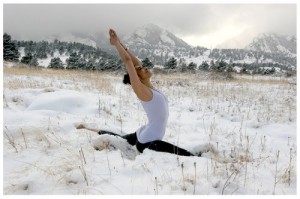 You might not think of yoga when you consider ways to cool down. As a matter of fact, with the proliferation of hot yoga, you may only think of yoga as an activity that is meant to generate heat. But, yoga and meditation offer a variety of ways to help balance your experience of heat.
First, we should explore the concept of “heat” in the context of yoga. There are many different ways to look at heat and fire in energetic principles, asana/movement, and pranayama/breath. One approach to heat is to examine the “agni” or digestive fires located in the navel center. The heat produced during the effort of practicing yoga poses (asana) is designed to clear “energetic” impurities. An example of an “energetic” impurity might be an emotional block or a mental pattern that is no longer helpful. This allows energy to move more freely through the subtle body and creates potential where there may have not been any before the block was removed. The energy of heat and fire is that of purification and “fire is the underlying elemental energy of creativity and accomplishment (Tenzin Wangyal Rinpoche, 44).” When we are experiencing external heat, it give us an opportunity to connect with this internal element of fire and the power it has to remove obstacles to creative forces.
Sure, clearing impurities sounds good, but I’m going to give you three ways to use specific techniques in yoga and meditation to actually cool yourself down when you are feeling over-heated. From summer heat to hot flashes to trying to cool your head and heart after an argument, these techniques are tried and true cool down favorites:
 #1: Sheetali Pranayama
The word “sheetali” means cooling in Sanskrit, it is taken from the original word “Sheetal” which is soothing or cold. This breathing exercise (SOURCE):
- calms the mind and reduces the fight-flight response
- cools body and mind and lowers blood pressure (so if yours is low to begin with, be careful)
- effective in reducing hyperacidity and ulcers
- in the Hatha Yoga Pradipika, Swami Swatmaram says that a person becomes young and attractive by practicing this exercise (cool down AND get young and attractive—BONUS!)
- gives control over hunger and thirst
- if you are stressed, just 5 minutes of Sheetali breath will calm you
In this pranayama the tongue is rolled in a specific manner as shown in figure. But many people can not roll their tongue in this fashion. For these people alternate Sitkari Pranayama gives very similar effects. In Sitkari Pranayama, you draw air in through your teeth and exhale through your nose. Sitkari means “hissing breath” and is named after the sound made when you draw air through your teeth. Teeth hissing or Sitkari refers to the sound that is made when air is drawn in through the front teeth either slightly opened or tightly closed, with the tip of the tongue regulating the pressure of air and sound. This technique refers only to breathing in, while exhalations take place normally through both the nostrils.
How to do it*:
- Beginners can start with deep breathing practice in sitting position
- Then start inhaling through mouth by rolling the tongue, make sure that the air passing in is cooled via tongue. If you can’t roll your tongue, then follow the instructions given above for Sitkari or “hissing breath”.
- Initially 4 seconds inhale through mouth while rolling the tongue and exhale for 6 seconds through both nostrils, this can be practiced for about 5 minutes.
*Note: it’s really best to learn pranayama from a teacher and then practice on your own. If you ever feel uncomfortable, then stop and return to your normal breathing pattern. It is very important that you try not to strain while practicing pranayama—it should feel calm and never like you are holding your breath or not getting enough breath. This exercise can lower blood pressure, so if you already have low blood pressure, please be careful. If you have any questions at all about whether or not this is safe for you, please check with your doctor or yoga instructor. These instructions are provided for informational use only.
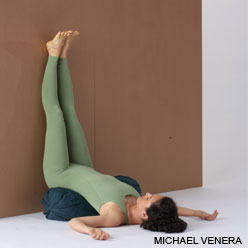 #2: Legs Up The Wall Pose (Viparita Karani)
Please note that if you have very tight hamstrings, acid reflux problems or if being upside down this intensely just doesn’t feel right to you, then you can modify this pose by lying down and putting your legs up on a couch or chair. Please remember that discomfort causes stress. If you experience discomfort in this pose or in attempting to do this exercise, immediately stop. The best thing is to consult with a yoga teacher in your area and learn how to do this pose in a way that is right for you. A small investment in a private session will give you a practice you can use for stress relief for your whole life.
Step by Step
The pose described here is a passive, supported variation of the Shoulderstand-like Viparita Karani. For your support you’ll need one or two thickly folded blankets or a firm round bolster. You’ll also need to rest your legs vertically (or nearly so) on a wall or other upright support.

Before performing the pose, determine two things about your support: its height and its distance from the wall. If you’re stiffer, the support should be lower and placed farther from the wall; if you’re more flexible, use a higher support that is closer to the wall. Your distance from the wall also depends on your height: if you’re shorter move closer to the wall, if taller move farther from the wall. Experiment with the position of your support until you find the placement that works for you.
 Start with your support about 5 to 6 inches away from the wall. Sit sideways on right end of the support, with your right side against the wall (left-handers can substitute “left” for “right” in these instructions). Exhale and, with one smooth movement, swing your legs up onto the wall and your shoulders and head lightly down onto the floor. The first few times you do this, you may ignominiously slide off the support and plop down with your buttocks on the floor. Don’t get discouraged. Try lowering the support and/or moving it slightly further off the wall until you gain some facility with this movement, then move back closer to the wall.
 Your sitting bones don’t need to be right against the wall, but they should be “dripping” down into the space between the support and the wall. Check that the front of your torso gently arches from the pubis to the top of the shoulders. If the front of your torso seems flat, then you’ve probably slipped a bit off the support. Bend your knees, press your feet into the wall and lift your pelvis off the support a few inches, tuck the support a little higher up under your pelvis, then lower your pelvis onto the support again.
 Lift and release the base of your skull away from the back of your neck and soften your throat. Don’t push your chin against your sternum; instead let your sternum lift toward the chin. Take a small roll (made from a towel for example) under your neck if the cervical spine feels flat. Open your shoulder blades away from the spine and release your hands and arms out to your sides, palms up.
 Keep your legs relatively firm, just enough to hold them vertically in place. Release the heads of the thigh bones and the weight of your belly deeply into your torso, toward the back of the pelvis. Soften your eyes and turn them down to look into your heart.
 Stay in this pose anywhere from 5 to 15 minutes. Be sure not to twist off the support when coming out. Instead, slide off the support onto the floor before turning to the side. You can also bend your knees and push your feet against the wall to lift your pelvis off the support. Then slide the support to one side, lower your pelvis to the floor, and turn to the side. Stay on your side for a few breaths, and come up to sitting with an exhalation.
#3: Pitta Balancing Asana and Diet
Pitta is one of the three main dosha’s (constitutions) in Ayurvedic medicine. If you are curious about your own constitution, you can take this Chopra Center Quiz! The Pitta dosha controls digestion, metabolism, and energy production. The primary function of Pitta is transformation. Qualities of Pitta dosha are: hot, light, intense, penetrating, pungent, sharp, acidic. Those with a predominance of the Pitta principle have a fiery nature that manifests in both body and mind.
Dietary Recommendations (SOURCE):
- Dairy can be helpful in balancing the heat of Pitta, take milk, butter and ghee. Sour, fermented products such as yogurt, sour cream and cheese should be used sparingly as sour tastes aggravate Pitta. Ghee (clarified butter) is recommended. Find our ghee recipe here.
- All sweeteners may be taken in moderation except molasses and honey.
- Olive, sunflower, and coconut oils are the best oils to pacify Pitta. Use less sesame, almond, and corn oil, which are more heating.
- Wheat, rice, barley, and oats are the best grains to reduce Pitta. Eat less corn, rye, millet, and brown rice.
- The sweeter fruits such as grapes, melons, cherries, coconuts, avocados, mangoes, pomegranates, fully ripe pineapples, oranges, and plums are recommended. Reduce sour fruits such as grapefruits, apricots, and berries.
- The vegetables to favor are asparagus, cucumbers, potatoes, sweet potatoes, green leafy vegetables, pumpkins, broccoli, cauliflower, celery okra, lettuce, green beans, and zucchini. Reduce tomatoes, hot peppers, carrots, beets, eggplant, onions, garlic, radishes, and spinach.
- Pitta types need to use seasonings that are soothing and cooling. These include coriander, cilantro, cardamom, saffron, and fennel. Hotter spices such as ginger, cumin, black pepper, fenugreek, clove, salt, and mustard seed should be used sparingly. Very hot seasonings such as chili peppers, and cayenne are best avoided. Chew on fennel seeds after meals to cool down acid in the stomach.
- For non-vegetarians, chicken, pheasant and turkey are preferable; beef, seafood, and eggs increase Pitta and should be minimized.
Asana Recommendations (SOURCE):
Asanas that help balance Pitta are those that place pressure on the naval and solar plexus region, in the small intestine where Pitta resides. There should be enough calming poses included to sedate irritation, anger, and intensity caused by Pitta. In general all forward bends, side stretches, twists, backbends that stretch muscles in your stomach will be beneficial.
Here are some suggestions:
– Ustrasana (Camel Pose) – This asana opens up abdomen, solar plexus, and chest, allowing for free movement of energy through these regions.
– Bhujangasana (Cobra Pose) and Dhanurasana (Bow Pose) – Also excellent solar plexus extensions for Pitta. They activate and support healthy thyroid gland function that is responsible for internal temperature regulation and metabolism. A better functioning internal thermostat will make hot weather more bearable.
- Matsyasana (Fish Pose) – as Yoga Journal notes, Matsyasana is the “destroyer of all diseases.” It stretches and stimulates the muscles of the belly and front of the neck; and stimulates the organs of the belly and throat
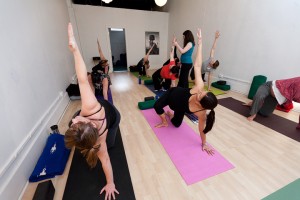
Utthita Parsvakonasana (Extended Side Angle) and Trikonasana (Extended Triangle) – are good example of side stretches. Side stretches stimulate the abdominal organs; help relieve stress; improves digestion; and can be used to alleviate anxiety.
- Paschimottanasana (Seated Forward Bend) and Pada hastasana (Hands to Feet) – all forward bends calm the brain and helps relieve stress and mild depression; stimulate the liver, kidneys; improves digestion; soothe headache and anxiety and reduce fatigue .
– Meru Vakrasana (Simple Spinal Twist) andArdha Matsyendrasana (Semi Spinal Seated Twist) – all twists stimulate the liver and kidneys, energize the spine, stimulate digestive fire in the belly; and relieve fatigue.
- Supta Vajrasana (Sleeping Thunderbolt or Diamond Pose), Sarvangasana (Shoulder Stand), Halasana (Plow), and Mayurasana (Peacock) – are good Pitta balancing poses, as well.
Love this article? Looking for more ways to improve the quality of your life through meditation, yoga and mindful movement? Make sure you sign up for my weekly newsletter so you are the first to receive updates and information.
Posted by Sharon Fennimore, MA, E-RYT, RPYT and DONA Trained Doula: a yoga and meditation instructor and mind body coach based in Pittsburgh, Pennsylvania. I offer phone coaching and support and online courses in meditation and professional development. My e-book, Matrika Prenatal Yoga is available on iBooks, Kindle and a PDF download. Check out my website for more information!




 Do you want to improve the quality of your health on your own time, at your own pace and in the comfort of your home, office or local coffee shop or park?
 Benefits of Matrika Yoga and Meditation