Tag: Practice

Satya as a Form of Grace

Satya is one of the most complicated of the yogic ethical principles.  It is translated as “truth” in many texts, but truth is, in and of itself, a construct of culture.  For example, I may hold as “truth” in my Quaker faith that everyone has the light of God in them (no matter behavior or evidence that seems to prove otherwise), while others may have very different ways of looking at the concept of Holy Spirit or the concept of the divine.  Am I telling the truth when I pray in this way?  Are the other understandings of the relationship between humans and the divine the NOT-truth?  And, how can we relate this use of the word “truth” when describing a commitment of faith to asking a person we work with if they are the ones who ate our yogurt in the shared refrigerator?  In the case of the yogurt, it could be seen that this is completely different.  Our colleague either ate our yogurt or they didn’t.  But, maybe when they answer us it turns out that they, in fact, had brought the same brand and flavor of yogurt to work and assumed the one they ate was theirs?  Maybe your yogurt got pushed to some dark corner of the refrigerator and you just assumed someone else ate it? Maybe this colleague was hungry and didn’t have any food, forgot their wallet at home, and in desperation chose to eat a yogurt in the refrigerator and since your name wasn’t on it they had no way to ask for permission or to know who it belonged to?  Do their personal circumstances change the “truth” of the stealing?

I am in a situation right now in which there is a great deal of confusion and a story is being told about me that does not resonate with me as true–at all.  It seems so fantastical that it’s almost impossible to defend myself.  I don’t think that this is a rare experience and that most humans have found themselves at one point or another feeling a profound dissonance between what is true for them and how another person is perceiving the situation.  It seems clear to me that the root of this concern can’t be solved by discovering THE truth because each person involved is secure in what they believe to be true.  Just as I can’t be shaken from my version of the story, my role in it, and my intentions, neither can the other people involved.

In this way, I invite myself to practice and see “satya” as a form of grace.  How can I stand in my own satya with confidence AND compassion?  Unless I can soften the edges of my narrative, then resolution remains near impossible.  And, I must remain anchored in my personal commitment to peace and non-violence above all else.  If I truly believe in the infinite nature of the life of spirit, then I must accept that a resolution may not be possible in this lifetime, but I can always choose peace in any moment.  The ethics of yoga are part of the practice.  Therefore, I challenge myself even in this most difficult of moments to practice “satya” as a way to extend grace into my life and the lives of others.

When I did my first yoga teacher training program, it was at a studio called “Satya” in Brooklyn that was sold before I even finished the program and became some other yoga studio and now it is even some other yoga studio (or maybe a falafel stand…..things change!).  In a 200-hour teacher training program that is registered with Yoga Alliance, the curriculum must include a certain number of hours studying Patanjali’s Yoga Sutras.  I dutifully memorized the yamas and the niyamas and promised as a teacher and student of yoga to bring satya into my work and my life.  But, truth isn’t just the opposite of telling lies.  The pursuit of truth is a process and a yoga practice of its own.  It turns out that satya is one of the most challenging aspect of practice and to bring into life off the cushion or mat.

A term that has come into use in the past few years is “fake news”.  When the truth is inconvenient, then the person who wishes it wasn’t the truth can point at it and declare it to be “fake”.  All the people who agree that if it really was true then it would be a terribly inconvenient and damaging situation can then get behind that person and say, “Yep, it’s fake all right.  FAKE!” (It turns out that exclamations and the confidence behind them make the statement even more powerful.).  But, there are all these other people who are hurt by the negation of what they feel is the obvious.  Uh….we all saw the video/heard the tape/saw the picture of the body of the dead baby washed onto the shore……what do you mean FAKE?  Someone had to clean that blood up, someone had to spend years healing their body and spirit after having their body grabbed in an unwelcome way, someone lost their retirement, someone’s child is irreparably hurt by lead poisoning because they drank the water that flowed through their kitchen tap, and someone had to wrap that baby’s body in a sheet and bury him.  In these situations, all these someone’s have had their lives completely altered by a truth that other someones are convinced is completely fake.  And, we can feel however we feel and get behind whatever truth resonates with us, but we can’t get justice for the victims this way.  There is no justice without grace.

In his book “Inner Engineering: A Yogi’s Guide to Joy” by Sadhguru, he instructs us to consider the yogic path as one of experiment.

“The yogic path is not a path of inherited belief; it is the path of experiment (page 69).”

As a spiritual scientist, I would suggest that in our commitment to practice as experiment that whenever we find ourselves feeling committed to a certain satya that we ask questions as an expression of curiosity:

  1. Where do I feel this “truth” in my body?  What emotions and state of mind are inspired by this “truth”?  As Rachel Carson suggested in The Sense of Wonder, “It is not half so important to know as to feel.”  Does this truth resonate in my spine?  Does this truth inspire me?  Does this truth make me feel angry or fill me with regret? Does this truth open my throat or give me a pain in my neck?  Is this truth opening my heart or making me feel tight and restricted?
  2. How does this truth impact others?  Since we are all “one” and interconnected in both the obvious and many unknown ways, it is important to explore with curiosity how this truth is working in our daily lives.  Does this truth improve the quality of my relationships with my co-workers?  Does this truth hurt anyone in their body or on an emotional/spirit level?  Try to ask questions without judgement.  Just because a truth hurts other people doesn’t make it false, but it creates some space around the fact of it just to ask questions and to explore the entire picture.  Therefore, in questioning this impact on others, allow all the answers to be felt in your body and known to your heart-mind.
  3. Have you ever felt in a different way about this truth?  Allow yourself to acknowledge if there have been times that something different may have be true for you or just to see that this truth has evolved over time.  If there has been change over time, what has inspired the change?  For example, maybe you have never trusted doctors….they are just out to get your money, they prescribe medications unnecessarily, they don’t really care about their patients, etc.  But, in the past year, your parent became very ill and you found their physician to be a healing force for good.  Your parent’s condition improved and you had excellent communication with the doctor and felt cared for and listened to.  Well, it doesn’t mean that their aren’t bad doctors out there, but now you have had an experience that has shifted your truth to allow for a truth where SOME doctors are honest and compassionate and worthy of your trust.  Don’t feel ashamed if you find that the truth has shifted over time.  It is important to explore and be curious without judgment.
  4. Is there a version of this truth that is an expression of grace in my life and the lives of others?  Is there a version of this truth that allows for the humanity to be honored or dignity extended?  If there isn’t a version of this truth that expresses grace, then I suggest that you question if it truly is “satya”.  For, any spiritual truth must also be grace. If a truth diminishes a person or group of people and strips them of their integrity, their spirit, their heart, or their ability to move freely and express their karma and dharma in this lifetime, then it is unlikely to be true.  If you are holding a “truth” about yourself that holds you back from your full expression, then it is unlikely to be “satya”.  Sometimes, the least honest truths we hold are the ones we hold about ourselves and then project onto others.

In the forward to the second edition (1989) of M.C. Richards’ “Centering: In Pottery, Poetry, and the Person”, Matthew Fox refers to centering as “the process of righting things, of making justice happen (xiii).”  In our meditation and mindful movement practices, we center and calm ourselves.  The more centered we are, the more likely that we can explore a truth to come to a place of genuine satya.  Standing in mountain pose, we can take a deep breath and feel the soles of our feet reach infinitely through space and time into the ground beneath us (Is it really solid?  Who is holding who up?) and the crown of our heads expanding infinitely into space on our out breath (Where do we end and begin?  What am I expanding out into?).  In that moment, the truth is the breath.  The satya of breath is always there for us to ground in, until, it isn’t.  It seems important, while we have breath, to keep taking this opportunity to find grace and extend it to as many other people as possible.  Everything else can just fall through our open fingers, but an investment in satya will always provide high return.

 

Beautiful and Sensual

I have been using essential oils in my practice and for self-care for many years.  It all started when I participated in some classes and workshops taught by Amy Galper and Schuyler Grant around yoga, acupressure, and aromatherapy about sixteen or so years ago.

A couple weeks ago, I received an offer from Utama Spice.  They very generously sent me a complimentary nebulizing essential oil diffuser with a bottle of their own Cajeput essential oil in exchange for my honest review of their products on my blog.  How could I say no?  Also, I very much appreciated the genuinely personal communication I received from Utama.  I made it clear that I would only write a completely honest review and they were in agreement with the conditions I presented to them.  As soon as I opened the package from Utama, I knew I was in for a treat.  The Danau Satu diffuser came in the most tasteful packaging with a floral decoration.  As soon as I pulled it out of the box I was amazed at how beautiful it was.  There is a wood base and a glass bowl and diffuser nozel.  While it is small enough that it can blend into any environment, it is also classy and ornamental in its sensual shape and design.  The instructions for putting it together were easy to follow and included just a few steps.  It is glass and needs to be cared for and maintained.  Replacement glass parts can be easily purchased on the Utama Spice website.

For me, like many parents, bedtime can be stressful as my children seem to resist putting the day down and their own exhaustion can be a barrier to welcoming nourishing sleep.  I decided to give diffusing some relaxing lavender essential oil into their rooms as we put on pajamas and started the bedtime routine a try.  The diffuser has a mellow LED light that provides almost perfect sleep light for children who may be afraid of the dark or resistant to complete darkness while they are falling asleep.  It’s a really pleasant light.  As soon as I turned on the diffuser, I noticed a very light “hum” of the motor, but it is a very quiet machine.  At even the lowest level of diffusion, my daughter’s room was almost immediately filled with the lavender oil scent.  This is very clearly explained in the instructions, but I must have missed it the first read through, so I thought that maybe the diffuser wasn’t working well when it just kind of stopped diffusing after the first minute.  I kept turning it on and off again when this would happen.  It turns out that it has an automatic cycle of diffusing for a while and then resting for a minute, then diffusing again.  And then, a miracle happened……..this was the calmest and most peaceful night we have ever had!  My daughter and I have been enjoying Kate Coombs mindfulness poems that are accompanied by the most magical of illustrations by Anna Emilia Latinen in the book, “Breathe and Be: A Book of Mindfulness Poems”.  So, we enjoyed this scented air and lovely poems and…..she just fell asleep.  No fighting, no complaints, no problems.  And, I woke up alone in my bed in the morning having found that my daughter had a most peaceful night of sleep where she remained in her own bed the entire night without waking me up or asking to get into bed with me—not even once!  After my daughter had fallen asleep, I unplugged the diffuser and put it in my son’s room and he immediately said that he liked the scent.  He also fell asleep without problems and as soon as he was sleeping deeply, I snuck into his room and took the diffuser back to my own space.

I added about 15-drops of an essential oil blend by Aura Cacia called “Meditation” that includes sandalwood, cedarwood, patchouli, and myrtle to the remaining lavender oil and diffused for 10-minutes into my practice space.  This is a really perfect diffuser for use in a meditation and yoga practice because it scents the air very quickly.  I felt that my space was energetically clear and peaceful before I even started.  I chose to turn the diffuser off during my practice, but depending on your personal preferences and choice of oils, there is no reason why you couldn’t leave it on for your entire practice.  The motor is so quiet that I didn’t even notice it and the glow of the light in the glass bulb would have made for a very calming way to light a night practice.

The next morning, I decided to give the oil that was provided with the diffuser by Utama Spice a try.  The cajeput essential oil is a very light herbal scent that has a hint of eucalyptus and tea tree oil refreshment, but is much less astringent or medicinal.  I found it invigorating for the morning, but it also created a very peaceful energy in my space.  I complimented this scented environment by drinking a cup of jasmine green tea and the floral and light green notes of the tea felt so joyful in that light and peaceful feeling space.  The scent of cajeput is very clean and bright and I am so delighted to have been given this opportunity to try it.

As much as I have enjoyed using essential oils for many years, this is the first time I have used a diffuser like this.  I am absolutely amazed with what a big difference it makes to use this Danau Satu diffuser!  Using a diffuser allows me to bring a significant scent into the environment in a short period of time and to either continue that level of diffusion or enjoy that shift in energy for a shorter period of time.  Also, it truly is a beautiful object that complements my meditation and yoga space and home.  In order to be thorough in my review, I did follow the instructions for a quick cleaning with alcohol that is recommended in the instructions.  It was easy to do and since this is such a lovely and useful machine, it is absolutely worth it to take a few minutes a week to care for it so that it will last for a long, long, time.  This diffuser was perfect for shifting energy in my home to promote restful sleep for my children, but was also ideal for scenting my practice space to prepare for a relaxing seated meditation with mindful movement.  I also use insense for this purpose, but that can be smoky and I liked being able to scent the air and then turn the diffuser off so that there wasn’t any smoke or oils in the air while I was practicing pranayama (breathing exercises).  It’s nice that I could choose to keep the diffuser on for up to two-hours so that I could also keep it on for an extended restorative yoga practice or yoga nidra practice.

I am so grateful to Utama Spice for this beautiful gift that has genuinely improved my quality of life.  If you are looking to buy a diffuser, while I have never used any others and can’t “compare”, I can assure you that this one is lovely, works incredibly well, and has features like a low motor hum and graceful light that make it ideal for using to create peaceful sleep and practice space.  I’m so pleased with this product that I’m hoping to try some of Utama Spice’s yoga mat sprays and other products very soon.  To buy your very own Danau Satu nebulizing diffuser, please follow the links in this review or head right on over to : https://utamaspice.com/danau-satu-nebulizing-diffuser/

Unicorn in the Sky and Other Magic

Hello there dear!  It’s Bibliotherapy Saturday  and I decided to start today’s exploration with a magazine I don’t usually read.  Ever.  I decided to start with February 2018 issue of Astronomy magazine.  Why you might ask?  Good question!  It’s because there was a hook on the cover that suggested that I could “TOUR Monoceros the Unicorn” on page 60.  I love unicorns.  How could I resist?  Monoceros the Unicorn is the 35th largest constellation out of the 88 constellations and the figure lies within the “Winter Triangle: the stars Sirius, Betelgeuse, and Procyon.”  The short article then has some pictures of and features of the area around the constellation and notes what is special that you can see either with the naked eye under a dark sky or what kind of telescopic enlargement is required.  This kind of night sky exploration is what I had been hoping for when I signed up for a basic astronomy class in college.  Instead, I got a whole lot of physics and math that I didn’t have the background to do and wasn’t sure what any of it meant.  I don’t know about you, but I feel kind of excited about this Unicorn dancing around the Winter Triangle of our night sky!   Recently, I have also come across a number of books and articles that refer to star bathing, which is just like sun bathing, but under the night sky.  While it may be difficult, or even impossible, in urban areas to isolate from other light sources, I have to believe that, with intention, one can go outside in the night to absorb the light of the stars and receive some of the benefits.  And, if those stars happen to be in the shape of a unicorn……..that HAS to be some extra special and nourishing star bathing.

When I was designing the curriculum for my new Buddhist meditation and nature focused yoga teacher training program, I felt called to pull ecospirituality into my yoga and meditation practice and work.  I also read an article in the November 2017-January 2018 Womankind magazine today called, “The Gardening Effect” by Lucy Treloar that quotes a biologist by the name of E.O. Wilson:

“…nature holds the key to our aesthetic, intellectual, cognitive and even spiritual satisfaction.”

Wow!  Go ahead and read that a few times and think about how much time you spend outdoors, about the quality of water and food that you consume and make a part of your body. I love an essay/memoir in this magazine by Katherine Scholes about her time as a child following her father, a physician, on his travels through Tanzania before independence when it was called Tanganyika.  The memoir is called “Home in the Open Savannah” and there are fabulous pictures of the author and her siblings as children.  In many of the pictures they are holding up dead birds with huge smiles on their faces.  I think of my children all stressed out about school schedules and homework packets and spending too much time on their iPads and how different their lives will be for not having had this kind of adventure in childhood that the author describes, but also how different they will be for having the ones that they are having.  Because, it’s all an adventure.

Also in this magazine, Womankind (11/17-01/18) on page 93, there is a Tanzanian proverb:

“A wise person will always find a way.”

This proverb is interesting to me, especially completely out of context, as it brings to mind my knowledge of the Tao….which is a certain kind of “way”.  Perhaps a wise person always finds a path to the flow of spirit?  Finds a way to a path, any path that will accept their feet and they walk it until the path unfolds and things seem more clear.  Or, maybe it is an invitation to the power of intention, that once we are determined, we relax around that determination so that we can be creative about how to manifest our desire?  It would be interesting to use this as a positive affirmation when I feel like something is impossible to remind myself that there is, in fact, a way.  There is always a way.

Here are some other books that made it to the reading pile:

Attracting Songbirds to Your Backyard
By Sally Roth

Did you know that some songbirds won’t ever consider a bird feeder, no matter how well-stocked, to be a food source?  This book is filled with interesting projects for making and providing food sources for song birds to diversify the birds that come and serenade you in your yard.  I also learned a lot about birds that are native to other places other than the Eastern parts of the USA where I am most familiar with bird populations.  Invite the birds to sing to you this spring and summer!

The Art of Stopping Time: Practical Mindfulness for Busy People
By Pedram Shojai

I like this meditation book a lot. There are lots of little tricks and exercises for finding ways to be mindful through your day.  I especially appreciated the suggestions on learning how to relax your neck, learning animal tracks, and taking five deep breaths every thirty-minutes throughout the day.  Sometimes, a little shift in attention can make a huge difference in your quality of life.  This book offers a lot of suggestions on how to make little shifts.

The State of Mind Called Beautiful
By Sayadaw U Pandita

Well, this is a vipassana meditation book with a very interesting name.  But, the perspectives and techniques offered are inspiring and a great way to either begin a personal meditation practice or to inspire and enhance an existing practice.  I find that this book has a very unique discussion on the challenges that come up during practice, such as pain in the body and a wandering mind.  The suggestions offered for working with obstacles within and around practice are very helpful and creative.

Flavor: The Science of Our Most Neglected Sense
By Bob Holmes

Just fascinating!  I’ve always thought that flavor and taste were synonyms, but, it turns out, they are not the same thing at all.  This is a very easy to read book and I found the discussion on what gives vegetables their flavor, or makes us believe them to have flavor, especially interesting.  It turns out that sometimes, what we taste as being a very sweet tomato isn’t sweet because of sugar content necessarily—its the hundreds of volatile aroma molecules.  And, cheap wine tastes better when people are told it is expensive even when, in a blind taste test, most will think the cheaper wines taste better anyway.  So, pour that $10 bottle of wine into a carafe and tell your guests it’s a $90 bottle of wine…..to enhance their enjoyment!

What’s in your reading pile this weekend?  Please comment below.


Forward Folds and Bending Over Backwards in Nature

The number one thing that adults say when I tell them that I am a yoga teacher is:

“Oh, I can’t do yoga!  I’m so inflexible and I can’t even get close to touching my toes.”

For about twenty-years now, I have tried every socially acceptable way possible at these moments to try to explain that yoga isn’t about being flexible, that anyone and everyone can benefit, that one may or may not become more flexible through yoga, that flexibility is, truly….besides the point entirely.  As soon as I start talking, I see the recipient’s eyes glaze over.  They are no longer paying attention to me, mostly because they only asked what I did for a living as a social pleasantry in the first place. Now, they are filled with regret for having ever made eye contact in the first place.  I can almost see the thoughts of escape to the cheese platter or, even better, the bar, cross their mind.

A couple weeks ago I was on a walk with a friend when t he concept of “tensegrity” came up in conversation.  (As an aside, you know you have a pretty wonderful friend when “tensegrity” just pops up in casual conversation.) It made me think about the relationship between tension and flexibility.  Every once in a while I will have a naturally flexible student.  Believe it or not, it is the most flexible students who struggle the most in yoga poses.  The lack of tension or pull to push against makes them feel floppy and un-centered.  It’s hard to focus when there is a lack of effort.  These students need to learn to engage muscles in a different way in order to feel into the shape of the pose and create sensation, effort, and release.  For the least flexible student, the evolution of a posture, simply by holding, exploring, and breathing, appears profound.

When I organize a yoga class plan, or a practice for myself, I try to make sure that, during the practice, we take our spines in all the directions it can go in: forward-back, forward fold, backbend, side bends, and twists.  It feels really beautiful to release tension around the spine and to unwind the habitual movements of the day through the practice of asana.  So many of us start to get stuck through our daily lives as we hunch over desks, lean into the back seats of cars to insert children (sometimes not willingly) into their car seats, and fail to remain curious and open to all the movements that are possible, even when they aren’t probable. If you watch a 6-month old baby, just put them down on the floor in front of you and see, for even five-minutes, you will see that they practice about five to ten recognizable asana during that time.  Yoga poses (asana) are natural for the human body.  These shapes and movements reflect our inherent desire to take ourselves in all the directions we can move in.  We can slither, slide, press, release, squease, lift, drop, shimmy, shake, hum, reach, collapse…….there are infinite movements available to us.  Just watch a video of Michael Jackson dancing and you will realize that it is likely you are only using about 20% or so of your human body capacity for movement.  Yoga asana are the natural movements and shapes of the human body.  Me, hunched over a desk all day?  There is absolutely nothing natural about that.

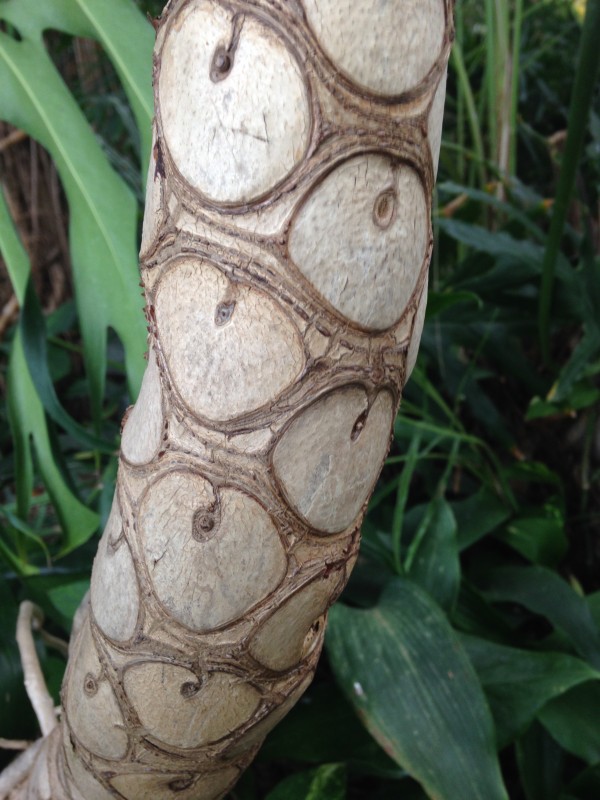
10-28-16-fall-continues-032In nature, there are many examples of trees and plants that bend.  Most obvious, of course, is heliotropism–movement towards the light.  But, if we look closely, we see that the cellular structures of plants and trees organize in circles, spirals, twists and forward folds and back bends in response to tension, gravity, and other forces.  Take, for example, the pattern on the trunk of this tree.  This intricate mapping of circles, swirls, and criss-crossings, is only possible because of the tension inherent in those spaces.  The inside of each enclosure maintains the integrity of the inside, while, at the same time, defining the space that is outside.

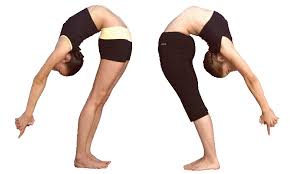
bikram-back-bendAny potter or architect will tell you that space is an important element of design.  Space is not synonymous with empty.  When you pick up a bowl, the space inside the curve represents the potential for holding.  It may, at that moment, be empty, but there is still space there.  Let’s say we fill that bowl with peppermint candies.  The space is filled with the candies, but it is still space.  When we practice yoga asana with this perspective in mind, we can get curious about the space that exists in our bodies and how to create more space.  What are the spaces that are empty?  Where are the crowded spaces?  What can be moved or re-distributed?  What are the solids providing something to push against?  Where are the natural bends and folds?  Look at the women in extreme back-bending postures.  These are extreme examples being used here not to suggest that your back-bend should look like this, but because these images invite us to examine the space around the body more easily.  Where is the space?  The space is actually beneath the spine.  While many of us refer to back bends as “heart-openers”, the anatomic reality of these shapes are that our hearts are pressed up into the chest cavity with the spine rising up to meet it.  The space underneath the spine is expanded and opened.

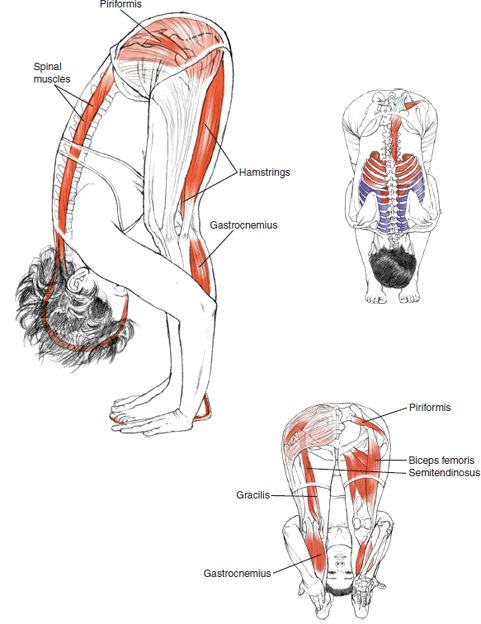
forward-foldIn a forward fold, the space for the heart expands and the spine rises above as it pulls back and away from the heart.  To give the heart the most room, we allow the spine to round, creating the space at the heart center.  We can breathe there, into the space, and feel the opening from the heart to our legs, and even further into the earth.  Experiment with this space you create in front of and behind the spine. Where does the space go when you release the yoga pose?  Actually, it is always there, but your shifting the contents of the space allows you to play with what is the container and what is contained.

I invite you to not only think about the shape that your fold or bend takes you in, but how the space around you shifts.  Explore these images of bends and folds in nature, not just the way that the shapes appear, but how the shape both creates and consumes space.  Whenever I guide students through savasana, the final relaxation at the close of most yoga classes, I always suggest that students release any tension that they might be holding in the space directly around their body.  It’s amazing how much release happens after that suggestion!

Written by Sharon Fennimore, a rogue anthropologist, yogini, and global doula based in Pittsburgh, Pennsylvania.


Geography of Awareness

img_7404

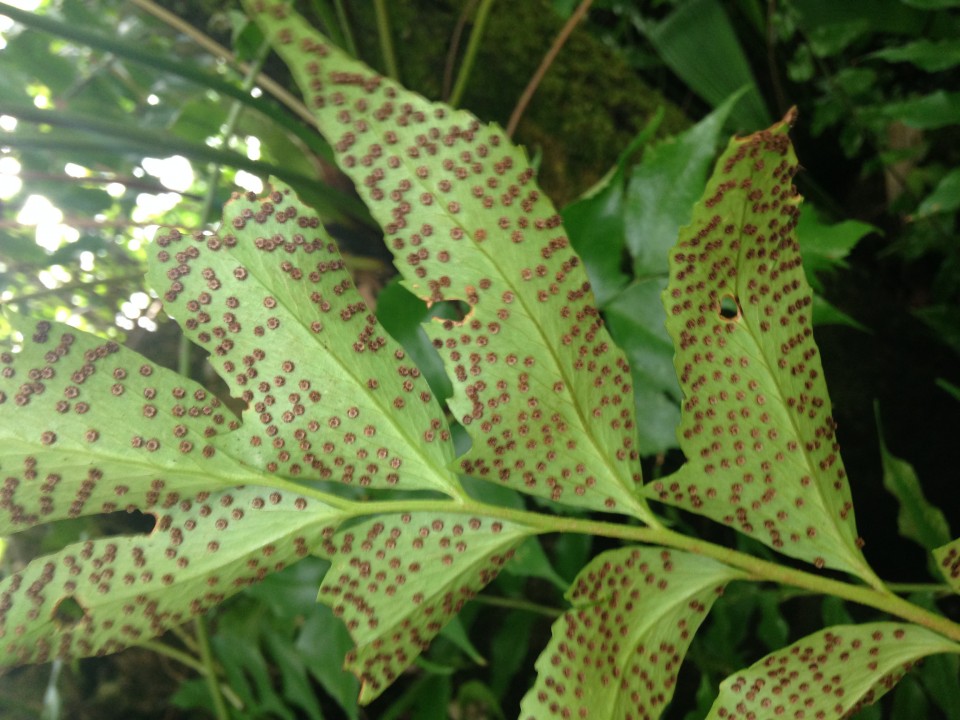
Do you see these “markings” on the back of the fern’s leaves?  In fact, these patterns are spores.  Each one is a potential fern.  The ferns carry their fertility in each and every leaf.  If you are interested in joining a spore exchange group (not kidding), then you might want to look into membership in the Hardy Fern Foundation.  The American Fern Society is over 100 years old and has more than 900 members all over the world.

img_7408

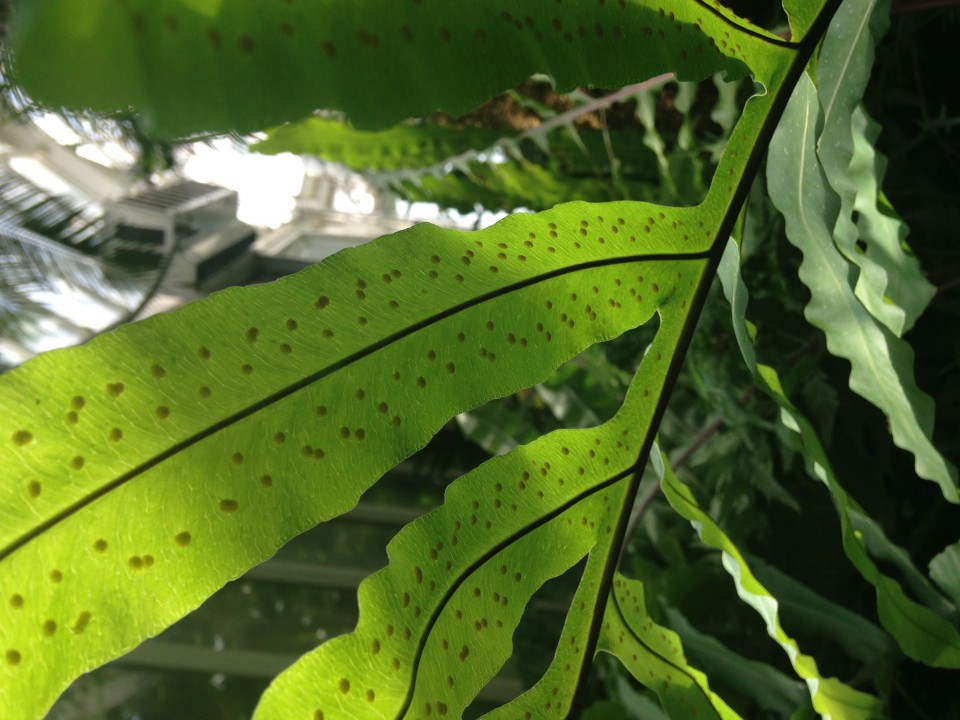
Not only that, but each type of fern has spores that organize in a different pattern.

img_7406

Recently, I have gone on retreat for a few hours a week to the Fern Room at Phipp’s Conservatory in Pittsburgh, Pennsylvania.  Each pilgrimage to this sacred space has brought me to a deeper place of respect for this amazing plant type.  I am also grateful to the amazing Theresa who cares for these plants and seems to have a well of patience for all my questions as well as some of the other horticulturists and care takers who work without fame or glory to keep my fern friends safe and healthy.

img_7419

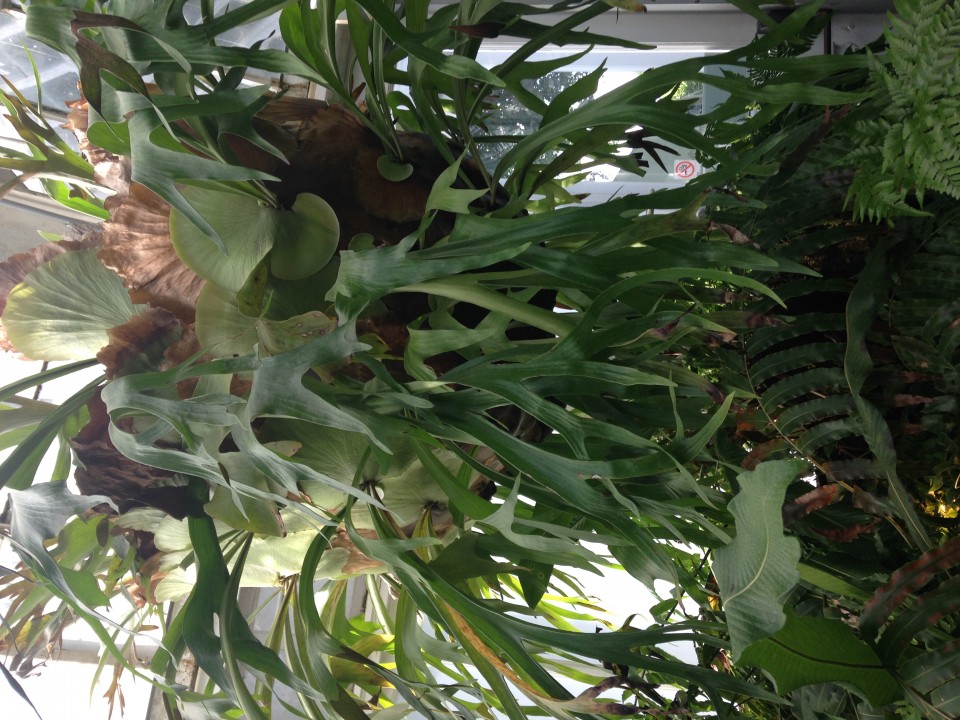
When I sit in this space, filled with ferns, light, air, and space, it makes me feel a lot like I’m being hugged.  The image directly above is a hanging Staghorn and the leaves that drape down almost appear as hands that might pat me on the head while offering me an oatmeal cookie and a glass of milk.  The energy of this space is fertile, abundant, and centered.  It is the embodiment of the heart chakra.  Sometimes, I place my hand in the leaves and allow the energy to roll up my inner arm directly into my heart-space.  Have you ever played with a plant with an exchange of energy?

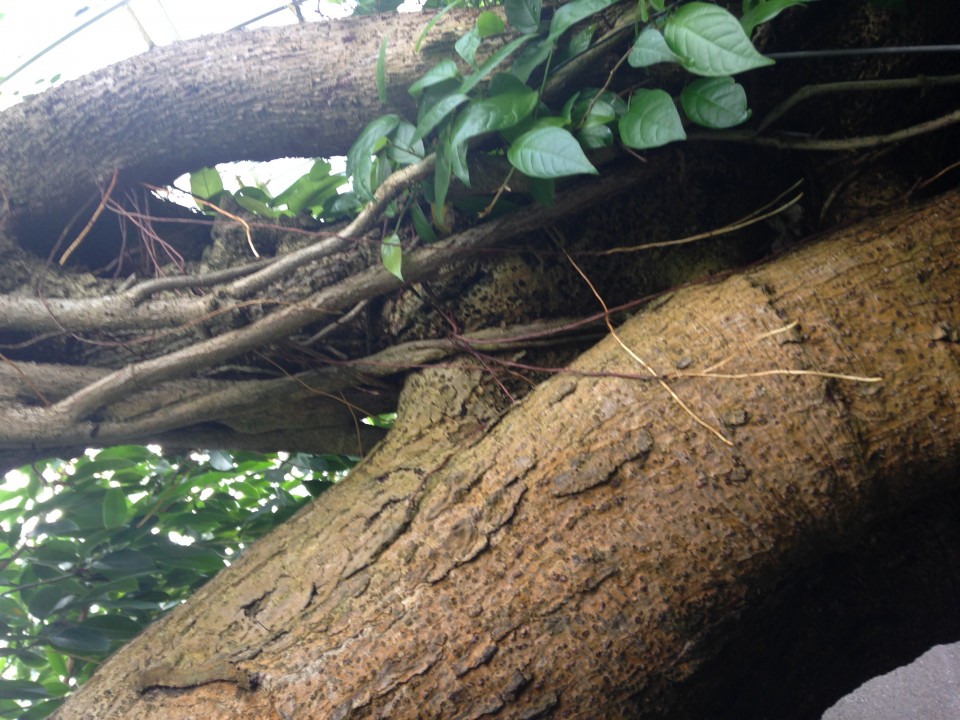
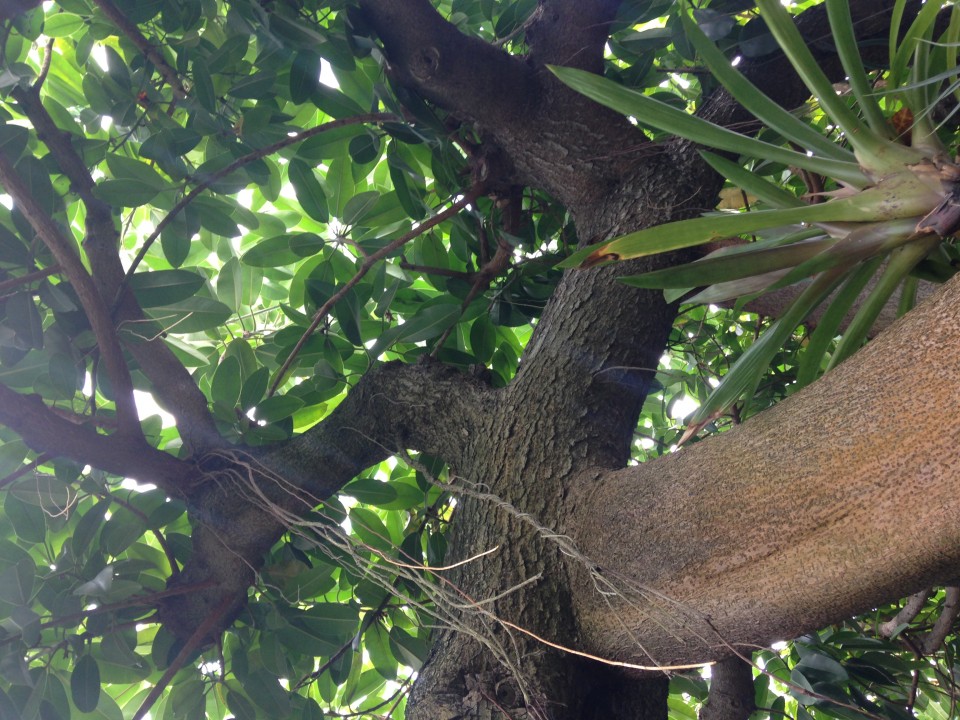
I have a beautiful friend who has some favorite trees that he likes to hug.  While it seems he is an equal opportunity tree hugger, there are some specific trees that he has a long-term relationship with.  When I watch him hug one of his tree friends, trees he has been hugging since he was a child, I can see his whole face and body relax.  What he receives from the tree, he also gives to the tree.  He really is one of the first people I have ever seen exchange energy with a tree.  Sometimes we use the term “green thumb” to mean someone who is good with plants.  Perhaps they can listen to plants and the plants tell them what they need to thrive?  Wouldn’t it be wonderful if we could all learn to listen to the trees?  One of the trees that I am developing a close relationship with is a ficus from Nepal that is in the orchid room at Phipps.  The ficus was added to the collection in 1849.  Go ahead and let that sink in.  I love to press my temple into this grounded being and reach one hand up to press into a higher branch while reaching another down to press into the trunk.

img_7400

How many people have walked beside this ficus newly engaged, with their baby, in their immeasureable grief, on their wedding day, upon the joy of a visit from a beloved friend from afar, to celebrate a holiday or birthday or special occasion? This tree has witnessed it all, but not in silence.  No, the ficus has a deep and grounded vibration.  When I stand close, it absorbs low vibration from me and sends them down deep into the earth and returns high vibrations from it’s wisdom branches that face towards the sun.  Surrounded by fragrant and jewel-toned orchids, the ficus does not fear my worst or suffer from my offering.  I give, I breathe, I receive.  If this isn’t friendship, then what is?

img_7402

When we think about pilgrimage, we think of a destination, but my time with ferns and new friendship with a very special Nepalese ficus have made me wonder if we can also pilgrimage to a new geography of awareness.  In Charles Genoud’s poetic “Gesture of Awareness” (page 116), he suggests that

We may wonder where the body’s awareness is, imagining it’s in the body, but the body’s awareness will only be in the body if we stand outside ourselves trying to figure out where it is.

I can’t tell you how many times I have read Genoud’s book. While I have always had a strong affection for the practice suggested in his teachings, not all of it makes sense.  I have been practicing yoga techniques for enhancing my awareness for 25-years, but this concept above has not been applicable to my practice for all this time.  With my new connection to the vibration of plants and trees, or, rather, with my willingness to open to the vibration of plants and trees, I start to feel a glimmer of understanding.  Awareness is the softening of my friend’s beautiful face when I watch him hug his friend with his arms wide and face and chest warm and open against the bark of the trunk.

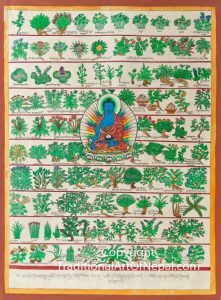
medicine-buddhaNot locating awareness in the physical body allows for a new geography to be explored.  It is the geography of space, perhaps that space that we know to be mapped by mandala. The pilgrimage here, then, is not internal, but it is to an entirely unique geography.  The palms of our hands have an energetic connection to the pericardium, the casing around the heart.  Even if it feels silly, perhaps you want to play?  Just pick a tree that calls out to you.  The more ridiculous this seems, the more you might need this for your soul, your well-being, and a full expression of heart-mind.  Gently place your palm on a place on the tree that calls to you for touch and connection.  Trust your instincts here.  The tree will welcome you.  You know what to do.  Take a few deep breaths into your palm and let the energy of those breaths flow up your arm into your heart space.  The color of the heart chakra is green.  You can do this.  Feel the leafy green tendrils of your heart open to the tree, be fed by the tree, sent laughter and wisdom by the tree.  From your heart to the tree, send it back through your inner arm, wrist and palm of your hand.  You are smiling because this is so important and liberating.  You can’t help yourself.

If you are not free to be out among trees for any reason, then go there in your mind.  Practice wherever you are.  As you practice, the geography of awareness will unfold like a forgotten map to a secret garden that has not been tended to in many, many, years.  This is an important yoga.  This is life.

Written by Sharon Fennimore, a yogini, teacher, and global doula who loves to pilgrimage each and every day to find the sacred in all that is around us in image, experience, and nature.  This post is for Jason, who brought me to the Allegheny National Forest for the first time in my life and, in doing so, changed the geography of my heart-mind forever and my most generous and beloved Aunt Patty who treats me to a membership at Phipps so I can spend as much time as I want with the ferns.


Buddhist Philosophy and Yoga Anatomy Workshops

These workshops are no longer being held fall 2016. Please check back for future collaborations and check out Mark’s website for his teaching schedule.

Philosophy and Embodied Anatomy Workshops

I am honored to host our guest instructor, Mark Chandlee Taylor, the Director of BodyMindMovement to facilitate the following embodied anatomy workshops yoga students and teachers.  All workshops are held at Mookshi Wellness Center in the Regent Square neighborhood of Pittsburgh.  Sessions begin with an hour of practice and discussion of the required text with Sharon which will be followed by a short break and then three-hours of anatomy with Mark.  All workshops are from noon to 4:00 pm.  I recommend that students obtain a copy of “Awakening of the Heart: Essential Buddhist Sutras and Commentaries” by Thich Nhat Hanh and read both his translations and commentaries in preparation for discussions.  Alternatively, I have provided links below where you can find PDF versions of the required texts.

As space is limited, pre-registration is highly recommended.  Workshops are $45 when you register online.  If you are blocked from online registration, please email Sharon Fennimore with your interest and you will be added to the waiting list: sharon@yogamatrika.com.  If space is available on the day of workshops, you will be warmly welcomed for $60 drop-in tuition.

October 16, 2016 (SUNDAY)
Text: Sutra on the Full Awareness of Breath (Anapanasati Sutta)
Anatomy Focus: Anatomy of Movement & Bone

November 6, 2016 (SUNDAY)
Text: The Foundations of Mindfulness_ Satipatthana Sutta
Anatomy Focus: Knees, Hips and Pelvis

December 10, 2016 (SATURDAY)
Text: Heart Sutra (Prajnaparamita Hrdaya Sutra)/New Translation by Thich Nhat Hanh
Anatomy Focus: Spinal Anatomy & Alignment

I Am The Door

Here are two common scenarios for me:

Scenario One: A Friend or Client is Stuck

This happens to me a lot and I guess it is an “occupational hazard” of sorts, but people come to tell me their stories when they feel stuck.  Many of my clients and students have tried everything, gone to every doctor, had all the tests, done all the treatments and they still don’t have the results they desired or the well-being that they were hoping for. I have friends that tell me about their stuck feelings in jobs, work relationships, personal relationships and just how they feel in their lives at this moment.  In many cases, though not all, a path to freedom seems clear to me, the observer.  When I first started this work, I was so delighted when I saw such a clear path because I assumed that if I could communicate it, then my clients could folllow my vision and get free fast.  But, what I immediately realized is that the clear path has always been present for my friend or client and for some reason, they aren’t going to walk down it.  Each of us has to keep putting one foot in front of the other and find that next step on our own.  In many ways, this has been my greatest challenge as an integrative health coach—-learning to walk beside my client offering insight and clarity, but not getting so attached to the “results”.

Scenario Two: I Am Stuck

Oh yes, I get stuck in the ditch of life myself quite often.  And, when I am down there in the darkness of the ditch, all I want is for someone to yank me out and say, “Girl, THIS is what you have to do right now.”  I want someone to provide me with direction, the next step, the right thing to do to get out of the ditch and back on level ground.  Except, just as in the case with my clients and friends, I also know that I would be unlikely to just accept and follow that advice, even if some magical force did yank me out of the ditch and tell me what to do.  It’s likely that I’m down there in the ditch with a shiny and solid ladder right in front of my face.  Why am I not climbing the ladder?  I don’t know.  Why aren’t you climbing the ladder in front of you?  You don’t know.

I AM THE DOOR

We don’t climb the ladder for a lot of reasons, but it is likely because of a spiritual issue, a karmic matter or a soul condition.  I don’t like to talk like this because we all want scientifically proven and documented treatments, cures and methods.  I don’t like to talk like this because as much as I am confident that it is true, I don’t actually know what it means.  All I know is that if you are down in a ditch, that there is a ladder in front of you and you aren’t climbing it because divine order wants you to sit down there a little longer.  Who knows “why”?  Maybe Divine Order wants you to climb up that ladder at the precise moment that you would meet someone walking along who will change your life in a profound way?  Maybe you need to be a certain age or have a certain amount of experience before you can accept what is at the top of that ladder?  It’s absolutely maddening to be in relationship with someone who isn’t climbing their ladder.  You know the friend I’m talking about, the friend who does nothing, day in and day out, but complain about their awful job, but they haven’t even dusted off the old resume to even consider a new job search.  Or, whatever it is…….joyless lovers, sullen sisters, tempestuous rascals….ditch dwellers!  All of them!

IMG_6947That’s why I can’t shout enough about how much I love, adore, admire and am inspired by these church doors in Philadelphia!  The ones that say, as if these red doors weren’t flipping obvious enough even to the legally blind, I AM THE DOOR.  Just in case you were wondering how to get in there, the path to God, to figuring out your relationship with the Divine with a capital “D”, you FOOL with a capital “F”—-I AM THE DOOR.  Because, this is the nature of the human condition.  The human condition is that all that we need is right in IMG_6946front of us, but we need to walk through the door, we need to take action.
The key though is not to think that the fact that the door is obvious makes it “easy” to walk through it.  If we aren’t ready, we can walk in and out of the doors as much as we like, but we will still feel stuck.  They key is being open to inspiration, transformation and the energetic shift required to open to joy.  This is the radical reason why we don’t do anything that is good for us.  I tell people I’m a yoga teacher and they generally have one of three responses:

  1. Oh, I’m not flexible.  I can’t even touch my toes!  I can’t do yoga.
  2. Oh, yoga……I NEED yoga.  I should do yoga.  Really, I am supposed to do yoga.
  3. I love yoga.  I take yoga classes all the time.

Yoga IS a transformative practice.  For the record, you don’t need to be flexible and touching your toes is neither a measurement of general flexibility nor relevant to the practice of yoga.  But, the second response is interesting because it means to me that the person talking knows on some level that practicing yoga would be transformative for them, but they don’t do it.  They are choosing not to walk through the door.  The unlocked door just sits there, closed in the cobwebs of their conciousness, but they aren’t going to approach it and open the door.  They don’t want to know.  “Knowing” doesn’t solve any problems and it might just create additional ones.  Yes, doing yoga can cause a lot of problems.  Walking through the door, coming up on the ladder—it’s messy, ugly and potentially going to rock the quiet little rowboat of your life.

My favorite is when people tell me that they “can’t meditate” because as soon as they sit down their mind starts to race.  News flash!  You know what this means?  It means that your mind is CONSTANTLY racing and you are just letting the distractions of life keep you from this fact.  Your mind didn’t start racing when you sat down, it’s just that you finally took a moment to observe your mind.  That racing mind of yours is causing all kinds of problems for you under the surface.  And, I’d venture a guess that it is causing all kinds of problems for you in your relationships, at work, with your diet and with your satisfaction with life.  You are eating when you aren’t hungry, making agreements you don’t agree to, buying things you don’t really want or need, signing gym contracts when you’ll never see the inside of that locker room, going on that second date with that guy who had too many drinks on your first date but you are really hoping it isn’t a problem and yet you know that it IS a problem…………..Yes, I’m suggesting that you sit there all uncomfortable with your mind racing and your stomach in knots and your shoulders all tied up and tense around your ears and your breath shallow and unsatisfying in your chest.  Just sit there and suffer.  Because that suffering is your door.  You can’t medicate it, avoid it, distract yourself from it, circumambulate it—all you can do is be with it.  Go through it.  See it.  It’s just as obvious as the fact that the red door is the door, yet that church leadership knows that they need to make it plain and simple regardless of how obvious it is.

I AM THE DOOR.

Written by Sharon Fennimore, a rogue anthropologist based in Pittsburgh, Pennsylvania.  I love to travel, take walks and seek inspiration in my environment.  When I find something interesting, I share it on my blog and Facebook page: Pilgrimage Pittsburgh.

Say What You Mean

There is a short essay by Brian Doyle in the March 2016 issue of The Sun literary magazine titled, “The Way We Do Not Say What We Mean When We Say What We Say” (page 23) that suggests that, “Perhaps languages invent themselves and then have to hunt for speakers.”  When I read this, it made me think of a poem by Hafiz:

Your Beautiful Parched, Holy Mouth

A poet is someone
Who can pour Light into a spoon,
Then raise it
To nourish
Your beautiful parched, holy mouth.

(Translated by Daniel Ladinsky and found on page 59 of “I Heard God Laughing” 2006)

Many of you who have studied with me know of my fascination with the Matrika, the vibration of truth that finds its home in the central energetic channel of the subtle body.  It is the vibration of that which is most true and each of us has a unique symphony, that the human ear can never hear, yet is playing within us since the moment of our conception.  This truth, one that we can never speak with our mouths, is vibrating in every cell of the body.  We know that we are in alignment with this vibration of truth when we experience well-being, peace and a calm sense of purpose.  When we are out of alignment with our Matrika, we feel anxious, worried and find ourselves in comparison with others and failing to recognise our gifts and contributions to the life force around us.  For, the magic of Matrika is that all living beings are vibrating with their own symphony. When we witness someone who is intimate with their Matrika, we have a sense of their peace and it is a beautiful thing to see and feel.

Lissa Rankin, in her profound book, The Fear Cure, says that, “According to the Centers for Disease Control and Prevention, 80 percent of visits to the doctor are believed to be stress-related.  Yet …what is ‘stress’ if not fear, anxiety, and worry dressed up in more socially acceptable clothing?” (pg. 11, 2015).  If  friend asks us how we are doing, claiming we are “busy” or “all stressed-out” are not only socially acceptable, they are badges of being “responsible”, “productive” and “active”.  What would happen if we told the truth?  What if we said, “Well, I had a really nice breakfast and my kids are healthy, but I can’t escape this terrible nagging fear that I’m not living my best life and I’m simply terrified of everything, all the time!”.  If you were in alignment with your personal sense of truth, you would not worry, would not rush, would not feel a sense of loss even when everything around you is “ok”.

So, we medicate our anxiety with diets.  Food diets that support our greatest health and help us obtain our “ideal weight”.  Organization diets that support us in our scheduling, sorting, managing our stuff and our time.  Relationship diets that help us know what it is ok to ask for from our partners and what makes us selfish or unlovable and instruct us in how to schedule social time, date nights and be a really wonderful parent at the same time.  Beauty routines, exercise routines, and self-control so that we get enough sleep and wear just enough make-up to look alive enough to be “presentable” and we walk around like we are about to fall apart, but the package sure looks nice. As Ben Franklin said, “Some people die at 25 and aren’t buried until 75.”.  For many of us, hours, days and weeks….years!…go by and we are just trying to “get by” or “fake it until we make it”.  I’m no exception.

I will say that my yoga and meditation practice, over the last twenty-years, has become a barometer of my alignment with my Matrika.  I can tell when I need to attune to my inner guidance and find a more open ear for divine guidance.  I watch for patterns, repetitions, chance meetings and shifts in my energy, weight, flexibility and experience.  I notice my sensitivities to touch, smell and temperature.  If I start to have any physical symptoms, then I pay attention without judgment.  I go to places where they sell herbs, teas and supplements and I see what makes me curious and asks me to pull it from the shelf.  Just yesterday I bought some kukicha (twig tea) that I haven’t had in years and having a cup this morning it felt like my feet were more firmly planted on the earth.  Why twig tea? Why now?  It doesn’t matter.  If it feels good, tastes good, smells good, then I say, “More please and thank you.”.  I start to eat by desire and I pick out the vegetables that seem bright and joyful, try out a new cookbook that happens to catch my eye at the library.  I try to spend more time with people who are inspiring and less time with those who drain my energy. Basically, I sense into what I need to move forward in alignment with my purpose and true path.

What language has put its words in your mouth?  What scent, taste or environment is calling out to you?  What people and foods nourish you?  Say yes to what brings you joy and you will find yourself in greater and greater attunement to your Matrika.  If you are so lost that you don’t know anymore where the words you say orignated and you can’t taste your food and you can’t feel your joy, then do not despair!  For me, the first step to tuning back inwards is through movement.  I choose yoga and walking.  I love to swim and to dance, but these aren’t always possible.  I can do yoga and walk pretty much anywhere.  When I move, my thoughts roam freely without my judgement or commentary for my interior narrator.  After I move, I usually have a lot more thoughts about what I like or want more of.  I don’t pressure myself to take action.  Sometimes I just let the idea sit out there as a reminder that I have choices, that I have preferences, that I am a person who knows how to access joy and creativity when the time is right.  I’ll tell you, I’ve got an idea in my mind these days that I’d like to go to Portland, Maine.  I’ve never been there, but it has been calling to me.  There’s an aromatherapy workshop I would like to go to this summer in New York.  It’s kind of expensive and it’s before my kids are out of school, so it’s not convenient or probable, but it is out there.  Even if I never go to Maine or take the workshop, having these ideas help remind me of who I am.

Many of my clients come to me because they have lost this ability to dream, to desire, to open to the languages that wish to come to them.  I have sought out mentoring, training and counseling for this very reason myself.  Sure, we could put a label on “it” and call it depression or “the sadness” (as I like to call mine sometimes), but it’s really when the weight of ourselves, our lives, our fears and the desires and wants and judgments of others and ourselves has gotten so heavy that it has blocked the light.  The sound of our own personal symphony is muffled or stamped out.  But it can’t be stamped out forever.  Our Matrika is, in fact, infinite.  Our Matrika is patient.  Our Matrika will wait for you to step outside and walk around the block, to daydream, to write some words on paper, to color something, to imagine, to get on the plane, to say the “no” that really means “YES” to something else that you really, really, really want.  It’s like that brilliant Jim Carrey movie (2008), “Yes Man” where he has to say “YES” to everything.

I hope you sip the light from your spoon soon my dear!

Written by Sharon Fennimore, a yogini teaching yoga, meditation and providing integrative health coaching services to women and families with young children based in Pittsburgh, Pennsylvania.  Sign up for my newsletter and get FREE membership in my online community “Make Room” where you will get all the support you need to clear emotional and physical clutter.

Pounding On An Open Door

“How long will you keep pounding on an open door, begging someone to answer?”  ~Rabia

As soon as I read this quote, I knew it was a question I needed to deeply consider.  It was illuminating to read this because I immediately visualized myself pounding furiously on the open door of life hoping that someone would arrive to help me find my way through.  Yet, there is no need to pound on the door, to kick, scream, beg or demand because the door is already open.  You can walk through, just as you are, right now.

According to the Bhagavad Gita, “There has never been a time when you and I have not existed, nor will there be a time when we will cease to be.  Therefore, play the role you’re meant for right now.”  It’s so hard to accept this in the busy, fast paced life of self-improvement projects that we all live in right now.  My clients all present various anxieties and fears that they are, at the same time, doing too much and missing a certain joyful quality in their lives that they are certain “should” be there and not doing “enough”—to be good partners, good parents, good employees, good citizens of the world.  We are overwhelmed with the sense that something is amiss and that we don’t have a right to just walk through the door and experience the joy that is being alive.  So, we improve ourselves and pound and kick away at the door only to find that there is no bell because there is no one to receive us.

A month or so back, I was attending a Quaker meeting and someone rose and quoted Micah 6:8 from the bible: “He has told you, O man, what is good; And what does the LORD require of you But to do justice, to love kindness, And to walk humbly with your God?”.  Ever since then, the word “kindness” has been coming up for me absolutely everywhere.  Later that same Sunday, I was in the library and the first book I saw was this little, almost pamphlet sized book by Ajahn Brahm called “Kindfulness”.  I checked a book called “Love Kindness” by Barry H. Corey out of the library.  The more I thought about it, the more I realized that cultivating kindness was part of my divine life journey.  Later in the same meeting, someone stood and told a story about how they were really pleased when the principal of their child’s new school asked that all students have respect for one another and their teachers during the orientation, but she thought that what they should really offer one another was kindness.  Kindness, she went on to say, is what is due to all humans, no matter what.  Respect, on the other hand, is earned.  I found this to be profound.  We do not have to earn kindness and we should not ask anyone else to earn kindness from us either.

How are all these things linked?  Well, honestly, I don’t know.  For me, reading is a part of my practice. When these types of ideas present themselves to me through my spiritual life, in my readings, and in my daily life, I try to pay attention.  Even on a surface level, I have to believe that expressing ourselves authentically, walking right through that open door and being gentle and kind to all the other people we meet is a path to great joy for ourselves and everyone that we meet.  How do we get the courage and grace to do this?  Practice.  It takes a lot of practice so that we have compassion for ourselves and others, so that we are aware and so we are mindful of our power to take actions that either improve or decrease the quality of life for everyone we come into contact with.  For today, no matter what your circumstances, offer at least five strangers your brightest and deepest smile.  Tell at least someone you know something that they do that you are truly grateful for or just tell someone that you notice them and all that they do.  Release your narrative in a relationship and just give your special someone a hug and tell them that you are so happy they are there—because, yes, they probably press your buttons and shrunk your favorite sweater and can’t help but burn toast every morning—but what is most important, is their beautiful presence, the light they shine in your life, your house, your family.  I am convinced that offering everything with “kindfulness” will not only profoundly improve my quality of life, but it is a step towards peace in my house, in my community and my world.

Written by Sharon Fennimore, a yogini teaching yoga, meditation and providing integrative health coaching services to women and families with young children based in Pittsburgh, Pennsylvania.  Join my online community Make Room!

Benefits of Reading Sutras

This month, I am starting an online course called Radiant Heart and we will be reading a number of Classical Buddhist texts that provide guidance for both meditation and interacting with others that builds our capacity for happiness and joy.  This course is appropriate whether you identify with “being Buddhist” or not as none of the texts ask you to pray to a certain God or believe anything in particular.  Therefore, this course will not challenge your current belief system or commitment to a particular practice of religion.  Instead, the course challenges you to experiment with breathing, movement and mind practices that have the potential to change how you experience daily life.

In the preparation of this course I have come across a relatively new science: neurotheology.  Regardless of what part of this science makes sense to you or doesn’t, it appears that reading religious texts and taking the time to consider ourselves as living beings in relationship to higher power is good for our health.  I don’t know very much about this, but it is something that I am profoundly curious about because of the role that faith, in general, has played in my life.

My goal for this course is to help participants learn how to breathe, meditate and move in ways that create an improved sense of peace and well-being regardless of current circumstances.  Whether you have been practicing yoga and meditation for years or just feel curious, but have never tried to meditate, this course will be beneficial to you.  For yoga teachers, this course has the opportunity to earn 15 CEU credits for maintaining your registration with Yoga Alliance.  Find the complete syllabus, reading list and lecture and office hours schedule HERE.  This is an online course, so you can work at your own pace and all lectures are recorded so you can download the videos and watch anytime.

Course will be accessible on April 3, 2015, but you can register anytime before the course ends in June.  You will have access to the live events and office hours if you start in April, but everything is recorded and available online so you don’t have to worry about being able to keep to the schedule.  Start at your convenience and complete the course at your own pace.

Here is a list of the five texts we will be reading and exploring practices for:

Finding the Breath of the Heart
The Sutra on the Full Awareness of Breathing
Pali of the Anapanasati Sutta

The Heart’s Intelligence
The Sutra on the Establishments of Mindfulness
Satipatthana Sutta

Mindful Heart Practices
The Heart Sutra
Prajnaparamita Hrdaya Sutra

Radiant Heart
The Radiance Sutras
Vijnana Bhairava Tantra

The Sutra on Happiness
Mangala Sutta
Cultivating joy and abundance