61% Discount on Monthly Membership

Available TODAY on GROUPON! Members also get discounts on workshops and events at Yoga Matrika. Groupon members are eligible to continue their membership with the initiation fee waived and you can cancel at any time without penalty. This is a great way to try a few classes at Yoga Matrika!

Posted by Sharon Rudyk, owner of Yoga Matrika, an intimate yoga studio for yoga, meditation and stress reduction in Squirrel Hill, Pittsburgh, Pennsylvania.

New Preeclampsia Research

Matrika Prenatal, Pittsburgh’s premier yoga studio dedicated to prenatal yoga, postnatal yoga, family yoga and childbirth education,  is always trying to stay on top of new research in women’s health.  Here is a very interesting study that discusses the role of trophoblasts (a father directed cell) in preeclampsia.

Posted by Sharon Rudyk, Director of Yoga Matrika and Matrika Prenatal, an intimate, community-based yoga studio in Squirrel Hill, Pittsburgh, Pennsylvania.

Ashtanga Yoga at Matrika

Introduction to Ashtanga Yoga
Facilitated by Lynn Rescigno

Sundays from 4:00-5:15 pm
Series Cost $40* [REGISTER ONLINE HERE]
Dates: October 30, November 6, 13, 20
Location: Yoga Matrika, 1406 S. Negley Avenue, Squirrel Hill

*Drop-in students admitted as space permits.  Drop-in tuition is available here.


What is ashtanga?

[Thank you to Annie Grover Pace for this informative article.  This text is taken directly from her original.]

Ashtanga Yoga, practiced in its correct sequential order, gradually leads the practitioner to rediscovering his or her fullest potential on all levels of human consciousness—physical, psychological, and spiritual. Through this practice of correct breathing (Ujjayi Pranayama), postures (asanas), and gazing point (driste), we gain control of the senses and a deep awareness of our selves. By maintaining this discipline with regularity and devotion, one acquires steadiness of body and mind. “Ashtanga” literally means eight limbs. They are described by Patanjali as: Yama (abstinences), Niyama (observances), Asana (postures), Pranayama (breath control), Pratyahara (sense withdrawal), Dharana (concentration), Dhyana (meditation), and Samadhi (contemplation). These branches support each other. Asana practice must be established for proper practice of pranayama and is a key to the development of the yamas and niyamas. Once these four externally oriented limbs are firmly rooted, the last four internally oriented limbs will spontaneously evolve over time. “Vinyasa” means breath-synchronized movement. The breath is the heart of this discipline and links asana to asana in a precise order. By synchronizing movement with breathing and practicing Mula and Uddiyana Bandhas (locks), an intense internal heat is produced. This heat purifies muscles and organs, expelling unwanted toxins as well as releasing beneficial hormones and minerals, which can nourish the body when the sweat is massaged back into the skin. The breath regulates the vinyasa and ensures efficient circulation of blood. The result is a light, strong body.

Toddler Yoga

Looking for a yoga class for toddlers in Pittsburgh?

Sharon Rudyk will teach a Toddler Yoga series starting on Friday, October 28 and continuing through December 9, 2011.  These classes are held from 11:15 am to noon.  Toddlers should be accompanied by an adult who will participate in the class and help to facilitate the toddler’s experience in the class.  Yoga experience is not required.  Please bring a yoga mat if you have one, but it is not absolutely required.

These are fun classes that include stories, songs and yoga poses and concepts that have been modified to be age-appropriate for one to three year old children.  Just the right combination of action and relaxation, you will be amazed at how much your toddler delights in yoga.  Adults will learn tricks for using yoga during the day and in the evening with their toddler for help in communication, eating/digestion and sleep habits.

We ask that you not take out snacks or toys for your child during class so that they can focus on the class and participate fully.  Of course, favorite comfort items are welcome.  You may want to bring snacks or a favorite toy so that, if your child needs a break, you can provide what they need to feel better and return to the group.

Cost: $10 to drop-in or $50 for a package of 6-classes
[Please use Mom and Baby class package for payment.  Please note that the package is only valid for 3-months and there are only six classes scheduled.  There will be no refunds for classes missed if you purchase a package of six classes and use less during the valid period. ]

Oh Wow!

It was raining, my husband’s cell phone wasn’t working, he was late to work and we pulled up to my son’s school just a minute before we were supposed to pick him up.  I, somewhat frazzled, jumped out of the car and put a bit of a spring in my step as I jogged towards the appropriate door of the school for kindergarten pick-up.  After I jogged a few steps, I heard this male voice beside me say, “Oh Wow!”.  I wasn’t sure what was so wonderful about a crowded elementary school pick-up scene on a rainy afternoon, but something about the tone of the male voice made me feel kind of uneasy.  It was a “Oh Wow” I’m looking at something kind of sexy “Oh Wow” (if you know what I mean).  But, I kept up my little jog until I heard the “Oh Wow” a little louder and a little closer to my body.  It felt even worse.  Then, I heard “Oh Wow, Oh Wow, Oh Wow watch them bounce.”  It was then that I realized that this man was referring to my breasts.

Yes, this man, on his way to pick up a child at an elementary school, was giving my 3-month postpartum boobies a very enthusiastic thumbs up in the jiggle category.  The tone was certainly not, “Oh wow, look at that powerful woman goddess who feeds her young through the miraculous production of liquid gold.”  The tone was more, “Oh wow, look at those boobs bounce.”  Not only was the tone ugly, but the idea that someone, a complete stranger,  could wield this power to render me flesh without power or personality was immediately repulsive.

Yet, I almost immediately started to feel that I could re-frame the experience.  Let’s be honest, my 3-month postpartum body is most definitely not “Oh Wow” by any measurement against what is currently considered attractive.  So, Mr. Creepy, I’ll take it as a complement that you find my lactating, postpartum self so very exciting that you felt the need to verbally express your feelings. And then I took it one step further as I came to realize that I am so VERY “OH WOW” right now.

I am the Oh Wow Goddess.

I am a woman who safely harbored a new life within the core of my body.  A new life that I nourished with meditation, chanting and energetic work for over 40-weeks.  A new life that I labored to greet and that I nourish now purely with golden liquid that I give and is received at my heart center.  I am the Oh Wow Goddess, a woman who juggles mothering two beautiful children, my marriage, my career and my obligations to my community while also managing to brush my teeth regularly and eat meals with one hand.  One day I might lose my Oh Wow Bounce, but I’ll always be the Oh Wow Goddess.

Here’s to every woman who has to shake hands with her fourth trimester body; a body that bears the evidence of her greatest power.  The power to create and sustain new life.  Here’s to every woman who jiggles and bounces in places where society has told us we ought to keep tight and in control.  Here’s to the newly conceived Oh Wow Goddess!  Jai, Jai, Jai!

Hey Dharmashakti, do you think you might write a new kirtan chant for the Oh Wow Goddess?  If so, be sure to give some credit to Mr. Creepy for it is not always our greatest admirer who inspires us to realize our greatness.  Sometimes, it is the vulgar voice in the background that asks us to step up and reveal the heroine.

Written by Sharon Rudyk, Owner and Director of Yoga Matrika and Matrika Prenatal in Pittsburgh, Pennsylvania.

Do You Know Your Heart?

This weekend, Plamen Karagyozov will be facilitating a three-hour workshop featuring the heart salutations at Yoga Matrika, an intimate space for yoga, meditation and healing in Squirrel Hill, Pittsburgh.  Acquaint Your Heart will be held from 1:00 to 4:00pm on Saturday, October 1, 2011 at Yoga Matrika.

If you were asked to describe your heart’s desire, most likely, you would immediately formulate a cerebral response that would be conditioned by culture, religion, traditions, expectations and other aspects of your unique human experience.  In reality, the heart is the very first organ of intelligence that you formed in your embryonic state.  We can learn how to consult the heart, listen to the heart and act on the heart through yoga and movement practices that draw upon our embodied intelligence to gain access to this important source of information.

The Heart Salutations that Plamen will offer in the workshop are a twelve step sequence flow (vinyasa) of energetic seals of the whole body(mudras) and asana that are accompanied by the breath (pranayama). At first, the body is warmed up and prepared for comfortable and effortless movement. Then the sequence is taught in sections with highlights on important details and gradually the entire salutation is practiced, featuring the various aspects of the heart and the circulatory system.Once the Heart Salutation is learned, with each pass through it, we layer in additional material, like Om, Yin-Yang and Tantra, transforming them from an intellectual concept to very palpable and practical aid in practice.

The Centers for Disease Control and Prevention (CDC) indicate that, in 2006, 631,636 people in the United States died of heart disease.  This represents over 26% of deaths that year. In 2010, they predicted that heart disease would cost the United States $316.4 billion. This total includes the cost of health care services, medications, and lost productivity.  There is most definitely a cost of life, quality of life and time with those we love when we ignore the intelligence of the heart.

In the Tantric view, we can use our bodies as a tool for liberation in this lifetime.  Invest in learning the heart salutations and practice them.  Learn how to relieve your cerebral perspective and listen to your heart.  Feel your heart’s desire and include this important form of intelligence in how you move through the world.

This post was written by Sharon Rudyk, Owner and Director of Programs at Yoga Matrika and Matrika Prenatal.  She hopes you will visit her soon and often at The Mat, an intimate space for yoga, meditation and healing in Squirrel Hill, Pittsburgh, PA, 15217. 

Why Restore?

This Sunday (October 2, 2011), Lisa Clark is going to be offering a Restorative Yoga workshop at Yoga Matrika, a most cozy and intimate community-based yoga studio in Squirrel Hill, Pittsburgh.  The workshop is just two-hours long, but the effects will last a lifetime.

You might wonder what the benefits of restorative yoga are, especially if you are healthy, injury free, athletic and tend to prefer active yoga practices with an emphasis on physical challenges.  Or, you might know that you desperately need a restorative practice, but can’t seem to justify the investment of time or money.  Maybe you aren’t even sure what restorative yoga is, but anything that might give you some peace and quiet for two hours just can’t be a bad thing………..

So, for the curious, here are some of the unique benefits of restorative yoga practices:

  • Activate your parasympathetic nervous system to fight illness and support optimum fertility, hormone balance, immune system and clarity of mind.
  • Lowers blood pressure.  Yes, even the Food and Drug Administration suggests that restorative yoga is highly effective non-drug therapy for hypertension.
  • Helps relieve chronic tension that can cause pain such as headaches and digestive disorders such as Irritable Bowl Syndrome.
  • Active relaxation improves mood and supports creativity and action sourced from intuition and grace.
  • Lower cholesterol and improve circulation
  • Better resistance to injury
  • Improve range of motion
  • Remove toxins from the body and support optimum health for liver, kidneys and endocrine system
  • Relieve sciatica and low back pain
  • Supports high quality sleep and can help relieve insomnia

The reality is that, for an amount of financial investment equal to a doctor visit co-pay, you can receive these significant benefits.  Of course, a regular yoga practice over time is your best investment for optimum health, but you will be amazed at how fabulous you feel after just one restorative yoga session.  If you would like to support your health with regular restorative yoga practices, April Lechwar teaches a one hour and fifteen minute restorative yoga class every Sunday evening from 5:45 to 7:00pm.

Here are some excerpts from Judith Lasater’s seminal book, Relax and Renew: Relaxing Yoga for Stressful Times:

 Stress Can Make you Sick

Stress begins with a physiological response to what your body-mind perceives as life-threatening.…For modern-day humans, this may be living with the fear of losing a job in a sagging economy, or the health crisis of a family member.


Whatever the stressor, the mind alerts the body that danger is present. In response, the adrenal glands, located above the kidneys, secrete catecholamine hormones. These adrenaline and noradrenalin hormones act upon the autonomic nervous system, as the body prepares for fight or flight. Heart rate, blood pressure, mental alertness, and muscle tension are increased. The adrenal hormones cause metabolic changes that make energy stores available to each cell and the body begins to sweat. The body also shuts down systems that are not a priority in the immediacy of the moment, including digestion, elimination, growth, repair, and reproduction.


To his detriment, modern man is often unable to resolve his stress so directly, and lives chronically stressed as a result. Still responding to the fight or flight response, the adrenals continue to pump stress hormones. The body does not benefit from nutrition because the digestion and elimination systems are slowed down. Even sleep is disturbed by this agitated state.


In a chronically stressed state, quality of life, and perhaps life itself, is at risk. The body’s capacity to heal itself is compromised, either inhibiting recovery from an existing illness or injury, or creating a new one, including high blood pressure, ulcers, back pain, immune dysfunction, reproductive problems, and depression. These conditions add stress of their own and the cycle continues.

Restorative Yoga for Health & Well Being

By supporting the body with props, we alternately stimulate and relax the body to move toward balance. Some poses have an overall benefit. Others target an individual part, such as the lungs or heart. All create specific physiological responses which are beneficial to health and can reduce the effects of stress-related disease.


In general, restorative poses are for those times when you feel weak, fatigued, or stressed from your daily activities. They are especially beneficial for the times before, during, and after major life events: death of a loved one, change of job or residence, marriage, divorce, major holidays, and vacations. In addition, you can practice the poses when ill, or recovering from illness or injury.


This post was written by Sharon Fennimore Rudyk, the owner and director of programs for Yoga Matrika and Matrika Prenatal.  She hopes to see you soon and often at The Mat in Squirrel Hill, Pittsburgh, Pennsylvania.
Keep Your Unkind Words to Yourself

Walk silently.

I read this today on a sign indicating appropriate behavior while in the hallway at my son’s elementary school.  When I read it the first time, it made sense to me.  I’m sure that I was trained in the same way and have probably seen this message infinite times in my own elementary school and other institutional experiences and beyond.  But, the more I looked at the sign, the less I was sure of what it meant. In my experience, this means, don’t make noise when you walk in the hall.  But, how do I know this?  Walk silently actually means something very different depending on the context.

There are other messages on other signs.  One of those messages is that students should “Keep their unkind words to themselves.”  Again, upon initial reading, I immediately knew what this meant.  It means that I shouldn’t call anyone a Poopy Head, you know, at least to their face.  But, again, the more I saw this message, the less I was sure of what this really meant.

I was even less sure of what it meant when I happened to walk by the lunch room on my way to my son’s classroom and heard a lunch aid yelling at a student who had walked up to her and asked for help because their hands were full of too much hand sanitizer.  She said, “You took too much soap.  Don’t you have soap in your house?”  Seems that someone hasn’t been reading the signs in the hall!  First of all, it wasn’t soap, it was foaming hand sanitizer.  Second of all, it is not beyond my imagination that this child had never used a dispenser for foaming hand sanitizer before.  Third of all, the implication that perhaps this child did not maintain hygiene at home and therefore was ignorant on how to use the sanitizer at school wasn’t very kind.

So, on the third day of school, this poor child was berated for having too much hand sanitizer on his hands.  I wanted to walk loudly (if you can walk silently, you can also walk loudly!) right into the lunch room with a paper towel and help that child remove the hand sanitizer.  Then, I wanted to use some of the hundreds of unkind words that had immediately come to mind when I watched that Pittsburgh Public School employee talk with complete lack of respect or empathy to that dear child.

What I know is that you can put up all the signs in the world, but the best way to lead these children will be by example.  We must show them that compassion is possible and makes the world a better place to live for everyone.  It feels really good to be compassionate and express empathy and kindness to one another.  We can learn to be loud in our silence and have so many kind thoughts that there is little room for the unkind words.

In our yoga practice on the mat, we first learn awareness.  The first time that we sit on our mat and wait for class to begin, we become aware of the hundreds of thoughts, ideas and feelings that travel across our mind in a single moment.  Some of those thoughts are unkind and we may, at the end of a long day, have myriad unkind words for our family members and colleagues.  But, our practice shows us that it isn’t a sign that should keep us from expressing these unkind words.  Our practice brings us to a space where we notice that our thoughts and feelings are constantly in flux.  Our unkind words in this moment are no more or less true than the kind words that we might have for the very same person on a different day or in different circumstances.  As a matter of fact, after calming the body and mind in a yoga class, we might find that all the unkind words are gone anyway as the intensity of the passion of experience has faded.

What I wish for this lunch aid and all the children and teachers and administrators in my son’s school is awareness.  Awareness that they live and work in community.  Awareness that their feelings and experiences are important, but always changing and shifting.  Awareness that we all make choices in how we express ourselves and that these choices impact other people.

On your mat, the next time that you practice, soften your face and tongue.  Relax the muscles behind your eyes and soften your inner ears.  Feel the expressed and unexpressed unkind words you carry within you.  Free yourself slowly by breathing into the unkind spaces and exhaling the unkind.  Let you body relax and watch the breath as you free yourself slowly of unkind words.  As you practice, catch yourself if you start to think anything but the kindest thoughts about yourself.  Forgive yourself for all the times you used too much soap, forgot to sort the laundry, used the wrong color pen, took the subway in the wrong direction and wore different socks.  Once you feel better, offer some forgiveness to everyone else.

Tonight, in my practice, I’m going to forgive the lunch aid.  It’s a start.

A Day of Zen for Mammas

Actually, it seems like this retreat is for anyone and everyone, but the facilitator, Karen Maezen Miller,  is the author of the fabulous book, “Mamma Zen: Walking the Crooked Path of Motherhood.”  This is not a Yoga Matrika retreat, but since it may be of interest to many people in the Yoga Matrika community, I definitely wanted to help spread the word.

Link to retreat information (You can register and pay through PayPal)

The Plunge in Pittsburgh Oct. 1, 2011

Saturday, Oct. 1, 2011
9:30 a.m.-4 p.m.
Unitarian Universalist Church of the South Hills
Pittsburgh, Pennsylvania
$75

Where do you go to find a moment’s peace, patience and forgiveness? To calm your mind, reclaim your focus, and restore faith in yourself, your relationships, your work and your life? The Plunge offers you the place and time to find everything you might have thought you’d lost.

I’m so lucky to be returning to the rolling hills and rivers of Pittsburgh. Our home for the day is the warm and wonderful Unitarian Universalist Church of the South Hills, otherwise known as Sunnyhill.

All are welcome: mothers, fathers, grandparents, men, women, couples, singles and friends. The day lasts from 9:30 a.m. to 4 p.m. and includes morning coffee and lunch, personal encouragement, spiritual refreshment, easy laughter, and good company. During the day, we travel from stillness to motion, examining the portals of love – attention, breath, faith, patience, forgiveness and peace – through beginning mindfulness practices such as seated and walking meditation and gentle yoga. It’s a perfect day to share.

Together, we realize the loving power of our own attention and the calming company of our own presence. Come, let’s welcome each other home.

Posted by Sharon Rudyk, owner and director of programs at Yoga Matrika and Matrika Prenatal–offering intimate yoga and meditation classes for all levels in Squirrel Hill, Pittsburgh, Pennsylvania.

Meditation Series

This fall, Yoga Matrika is offering a 12-week Meditation Series facilitated by Bhante Pema. This is a very unique opportunity in Pittsburgh to study and practice meditation. By making a 12-week commitment, you will start to see the benefits of regular practice over the course of three-months.

Dr. Josephine Briggs, the Director of the National Institutes of Health, National Center for Alternative and Complementary Medicine, says that, “It is now well established that the meditative state can be associated with changes in electrical function of the brain, and recent imaging studies suggest that there may actually be neuroanatomic changes as well.”  In addition, a new study by the Public Library of Science suggests that regular meditation can have a significant impact on stress related illnesses. “The study found that in comparison to a control group of people who had never meditated, a group of regular meditators actually suppressed twice the number of genes that induce stress responses such as high blood pressure and inflammation in the body.Long term effects of the expression of stress-related genes can have very harmful effects on health, including high blood pressure or chronic pain. Those who meditate regularly are thus at a greatly decreased risk for developing these problems.”

According to NCCAM, over 20 million Americans practice meditation for a variety of health benefits. You can find out more about meditation and the types of research that are being conducted now regarding meditation and impact on specific health problems here.

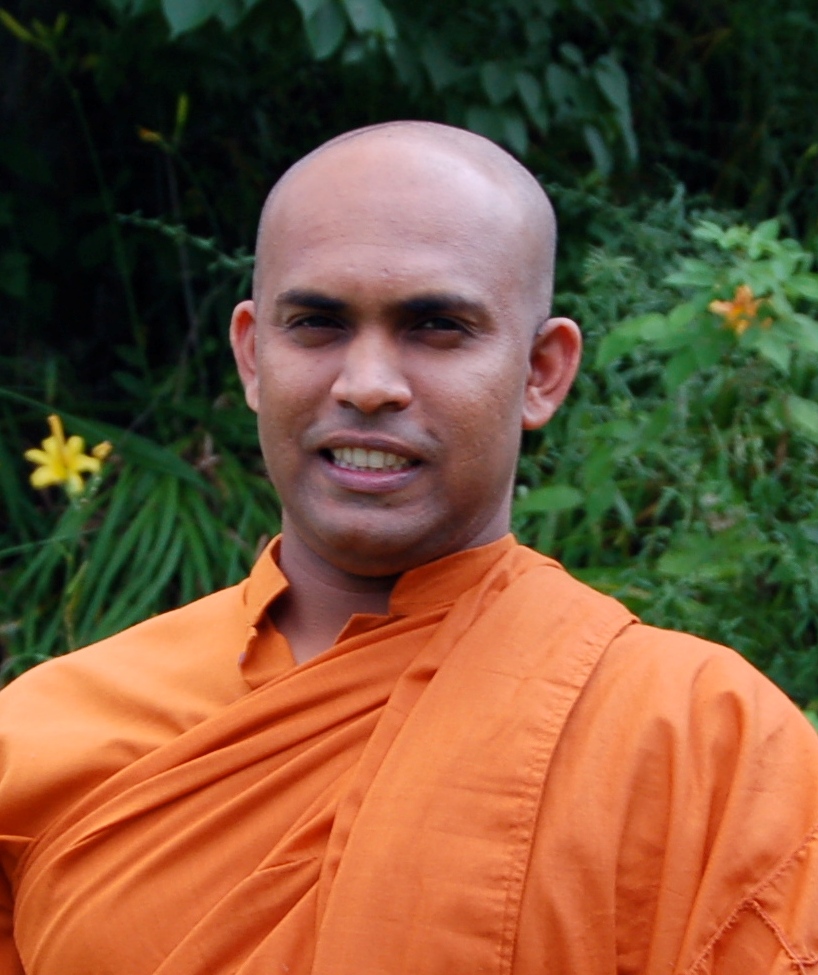
Our course instructor, Bhante Pema, is a Buddhist monk and is currently the resident teacher and abbot of the Pittsburgh Buddhist Center.  He is also working on a Ph.D. in Religious Studies at the University of Pittsburgh.  While the instructor is a Buddhist monk, the meditation style and techniques that are taught in this course are secular and this is not a religious group and instruction in Buddhism is not provided.  Everyone is welcome to learn these techniques to benefit their health and well being.

REGISTER HERE: $130 for 12-week course

Ven. Soorakkulame Pemaratana (aka. Bhante Pema)

Ven. S. Pemaratana was ordained as a Buddhist monk in 1986 and received higher ordination in 1997. His monastic training was under the tutelage of the most Ven. Attangane Sasanaratana Maha Thero at Sripathi Pirivena, Diyakalamulla, Kuliyapitiya, Sri Lanka. He holds a bachelor’s degree with first class honors in Buddhist Studies from the University of Peradeniya and a master’s degree in philosophy from the National University of Singapore.

He has lectured at the University of Peradeniya and the Buddhist and Pali College of Singapore. He conducts regular lectures and workshops in Buddhist teachings and meditation.  The Transcultural Society for Clinical Meditation in Japan gave him the 2008 Haruki Award for his research paper on Meditation and Cognitive Behavior Therapy. He is currently the resident teacher and acting abbot of the Pittsburgh Buddhist Center.

Posted by Sharon Fennimore Rudyk, Owner and Director of Programs for Yoga Matrika, an intimate yoga studio located in Squirrel Hill, Pittsburgh, Pennsylvania.  Discover more about our unique programs that explore the incredible healing power of yoga, breath and meditation on our website.