Tag: Meditation Pittsburgh

Working the Knots: Yoga and Yarn

NOTE: This is an “older” post from 2012.  I AM offering this workshop on November 15, 2014 at Indie Knit and Spin in Pittsburgh, Pennsylvania.  Check out the Indie Knit and Spin website for details and registration information.


Working the Knots: Yoga and Yarn
Sunday, January 27th, 4:00-5:30 pm
Location: Yoga Matrika
Facilitated by Sharon Rudyk (YOGA) and Cosette Cornelius-Bates (YARN)

Tuition: $15
Pay on-site with any credit/debit card or personal check.


Join Sharon  (YOGA) and Cosy (YARN) for this delightful workshop for yogis and knitters of all levels.  The workshop begins with some stretches that are helpful for knitters and techniques for enhancing knitting and creativity in general through meditation and visualization.  Once we are warmed up with all our creative juices flowing, we will explore the sensual and social sides of knitting by discussing our current projects and ideas together and receiving guidance from Cosy on a variety of unique techniques for materials, color work and pattern interpretation.  Then, we’ll knit together and close our workshop with a deep relaxation guided by Sharon.  You’ll leave the workshop feeling both inspired and relaxed!  No experience with yoga or meditation required.  If you are a knitter, we invite you to bring whatever project you are working on currently (or perhaps something from deep within your stash……..) and this is what you will work on during the knitting part of the workshop.  We also invite you to bring any questions that you have about knitting in general, materials, reading patterns or a technique that you have been interested in and/or can’t quite figure out.  If you have never knit before or are a genuine beginner, then we invite you to bring the following materials and we will work with you in a special break-out group for absolute beginner knitters during the knitting time: worsted weight yarn and size 7 or 8 needles (straight or circular is fine).  While this is not a “learn to knit” workshop, due to the nature of the workshop, it is only important that you are knitting curious and not that you know how to knit already.  We hope that this workshop will be inspirational for everyone!
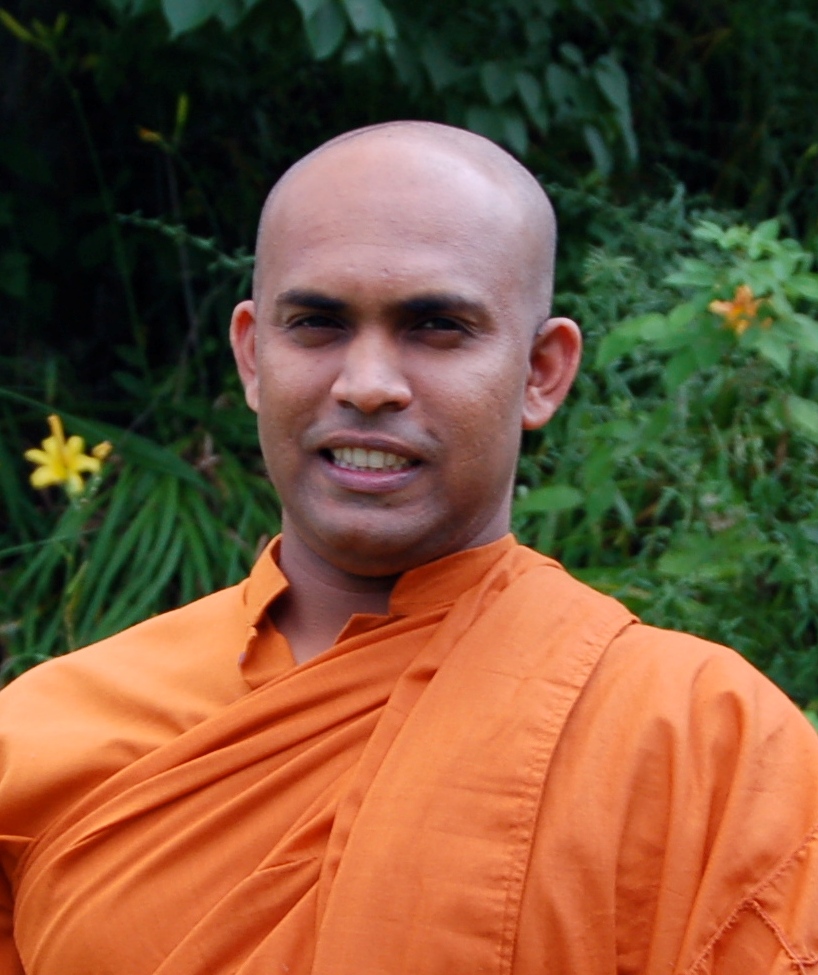
Meditation in Pittsburgh

So….Bhante Pema is traveling in Asia and we are missing the Monday night meditation classes at Yoga Matrika.  Please note that Bhante Pema’s fall meditation class series is filling fast and not only is there a $40 discount when you register for the series before July 1st, 2012, but registering for the series now is the only way to guarantee yourself a space in this amazing class series.  Yoga Matrika offers intimate meditation classes with Bhante Pema for $175 (early bird registration before 7/1/12 makes tuition just $135) for the 12-week series.  There is no other meditation class in Pittsburgh like these.  The environment is calm and supportive and the small-group class series allows you to receive personal attention and build your skills over time.

If you need some guidance and inspiration for your practice this summer, why not try an online course?  An online course in meditation will allow you to enjoy the sun, go out and play, and study and practice meditation at your convenience.  It’s hard to come inside and focus when all you really want to do is run through the sprinkler, garden and enjoy time outdoors with your friends, family and loved ones.  So rise early and study or take some time for yourself in the evening when the day of play is done.  This online meditation course is 12-weeks, just like our class series—-so you’ll be all set and ready for class when September 10th comes.  While it may seem now that the summer lies before you as a great expanse, you know that fall will be here in the blink of an eye. 

Just in case you are curious about some of the benefits of meditation, please check out the amazing benefits of meditation here.  Do you ever feel like a victim of your genes?  Read here about how meditation can change genetic expression

Posted by Sharon Fennimore Rudyk, owner and director of programs at Yoga Matrika, a boutique yoga center in Squirrel Hill, Pittsburgh, PA 15217.  Small group classes, private sessions, teacher training programs, workshops for all levels and more!

Beginner Meditation Course

Click Here!

We recommend this beginner meditation course.  There is a 60-day 100% money-back guarantee.

This is not a Yoga Matrika product, but we know that there are a lot of people in our community who can’t come and take a class, but really want to learn how to meditate or need some support for their daily home practice.

Stress Free Stress Reduction

At the Duke University Center for Integrative Medicine, an 8-week Mindfulness Based Stress Reduction Program costs $454.  At Yoga Matrika, Kirsi Jansa is offering a beautiful meditation-based stress reduction program called Healing Relaxation in the Tara Rokpa Style and the 6-week tuition is $150.  [ Flyer] While I recognize that even $150 is a singificant investment for most of us “normal” people and, even more challenging may be finding 2-hours free on a Saturday afternoon to make it happen, the reality is that this is an investment of $150 that can change your life.  This program is priced competitively in comparison with other programs of similar quality and is open to everyone—-absolutely no experience is required.  This is not a religious practice and we are very respectful of all religious and spiritual practices and orientations.  If anything, a program like this is likely to deepen your commitment to your current spiritual practice.

How do yoga and meditation help reduce stress?  There are a lot of different answers to this question, but one of the most basic ways that these types of practices help you reduce stress is that they teach you how to BE in the present moment.  Stress is generally a condition of trying to hold your mind in the future and the past while also participating in the present moment.  Concerns about the future,worries,  to do lists, goals, obligations and responsibilities, strategies for projects that will unfold in the future, unknown considerations and all the trappings of a better or worse future moment create stress in our bodies. 

What kind of skills do you learn in this type of stress reduction course?  You learn how to use the tools of your body and senses to keep yourself in the present moment.  This slows the central nervous system and the mind down giving your adrenal glands, nervous system and circulatory system a considerable break.  The more you practice these skills and learn to use your body as a tool for healing, the greater healing you will feel.  Specific skills include:

Breathing Awareness: learning to become aware of the process of breathing.  This sounds simple, but really, there are infinite ways of looking at and feeling the breath.  And, since you are always breathing, learning this skill gives you something you can do to reduce stress at any time in any place.

Body Scan: learn to feel your body using all of your senses and actively relax all the parts of your body.  Can you relax your little toe?  Sure you can!  You will be amazed at what you discover about your body when you take the time to experience it in a non-judgemental way.

Loving Kindness: use your awareness to extend compassion to yourself and others. 

Exploring the mind: without a specific focus for awareness, learn to watch the movements of the mind and do so without becoming attached

Pleae take advantage of this amazing opportunity to change your relationship to time, your body, mind and spirit.  Release stress and tension and learn new skills for maintaining equinimity and balance.  See the flyer for more details.  You can REGISTR ONLINE HERE.  The course start on January 28th and runs on six consecutive Saturdays from 4:00-6:00pm.

Healing Relaxation Flyer

 Posted by Sharon Fennimore Rudyk, Director of Yoga Matrika and Matrika Prenatal.  If you are not local to Pittsburgh and looking for a Healing Relaxation Course or more information about Tara Rokpa, you can find more information here.

Meditation Series

This fall, Yoga Matrika is offering a 12-week Meditation Series facilitated by Bhante Pema. This is a very unique opportunity in Pittsburgh to study and practice meditation. By making a 12-week commitment, you will start to see the benefits of regular practice over the course of three-months.

Dr. Josephine Briggs, the Director of the National Institutes of Health, National Center for Alternative and Complementary Medicine, says that, “It is now well established that the meditative state can be associated with changes in electrical function of the brain, and recent imaging studies suggest that there may actually be neuroanatomic changes as well.”  In addition, a new study by the Public Library of Science suggests that regular meditation can have a significant impact on stress related illnesses. “The study found that in comparison to a control group of people who had never meditated, a group of regular meditators actually suppressed twice the number of genes that induce stress responses such as high blood pressure and inflammation in the body.Long term effects of the expression of stress-related genes can have very harmful effects on health, including high blood pressure or chronic pain. Those who meditate regularly are thus at a greatly decreased risk for developing these problems.”

According to NCCAM, over 20 million Americans practice meditation for a variety of health benefits. You can find out more about meditation and the types of research that are being conducted now regarding meditation and impact on specific health problems here.

Our course instructor, Bhante Pema, is a Buddhist monk and is currently the resident teacher and abbot of the Pittsburgh Buddhist Center.  He is also working on a Ph.D. in Religious Studies at the University of Pittsburgh.  While the instructor is a Buddhist monk, the meditation style and techniques that are taught in this course are secular and this is not a religious group and instruction in Buddhism is not provided.  Everyone is welcome to learn these techniques to benefit their health and well being.

REGISTER HERE: $130 for 12-week course

Ven. Soorakkulame Pemaratana (aka. Bhante Pema)

Ven. S. Pemaratana was ordained as a Buddhist monk in 1986 and received higher ordination in 1997. His monastic training was under the tutelage of the most Ven. Attangane Sasanaratana Maha Thero at Sripathi Pirivena, Diyakalamulla, Kuliyapitiya, Sri Lanka. He holds a bachelor’s degree with first class honors in Buddhist Studies from the University of Peradeniya and a master’s degree in philosophy from the National University of Singapore.

He has lectured at the University of Peradeniya and the Buddhist and Pali College of Singapore. He conducts regular lectures and workshops in Buddhist teachings and meditation.  The Transcultural Society for Clinical Meditation in Japan gave him the 2008 Haruki Award for his research paper on Meditation and Cognitive Behavior Therapy. He is currently the resident teacher and acting abbot of the Pittsburgh Buddhist Center.

Posted by Sharon Fennimore Rudyk, Owner and Director of Programs for Yoga Matrika, an intimate yoga studio located in Squirrel Hill, Pittsburgh, Pennsylvania.  Discover more about our unique programs that explore the incredible healing power of yoga, breath and meditation on our website.

Compassion and Generosity

For those of you who live in Pittsburgh and use public buses regularly for transportation, you know that the last week has been a nightmare. At all times of day and night the buses are crowded and most service that we had come to depend on every 15-20 minutes is now only coming once every hour. Many bus drivers are frustrated and exhausted and riders are squished and even riders that have no business standing and hanging on for dear life are being asked to do so. With the reduction in service, many buses are too crowded to stop and pick up new passengers along the route.  As I looked out the window when we passed stops by there were literally ten to twenty people waiting at these stops who would now have to wait 30-minutes to an hour for the next bus with absolutely no guarantee that one might come that would actually be able to stop and pick them up.

I am currently 30+ weeks pregnant and was riding the bus with my four year old son last weekend since I had promised him a trip to the library. It was the middle of the day on a Sunday and we got onto a very crowded bus. One person in the front got up to give us their seat and I had my preschool age son sit down and I stood in front of him. The way the seat hit him in the back of the legs caused his legs to “fall asleep” during the ride and when we got up to push our way out of the bus his little legs buckled under him and by the time we made it off the bus he was complaining that his knee hurt. We had to go into a drug store for something and, by that point, my son was loudly insistent that his knee hurt VERY MUCH. Upon inspection it was clear to me that it was related to the seat on the bus and would be relieved in a few minutes since the cause of the problem had been removed.

About 5-minutes later, a man wearing exceptionally filthy clothing and pushing around a small cart of equally filthy belongings came up to me in the drug store. In one of his hands, he held out a damaged children’s toy that had, in its day of new glory, probably been a plastic jeep car of some kind, but was now a three-wheeled go cart without doors or a roof—-just the base and three-wheels remained. The man said to me, “Your little boy’s knee is hurt? Would this help him feel better?” I was so shocked that all I could come up with was, “Oh, no, we couldn’t take your car! Thank you so much, but his knee will feel better in just a minute.” But after we left the store, all I could think about was the incredible human capacity for compassion and generosity that is possible regardless of our perceived or actual economic resources.

Here I was, completely self-absorbed in my clean clothes with my floral Vera Bradley purse working through my frustration at having had to wait for a bus and be so inconvenienced by the uncomfortable ride while I searched the shelf for allergy medicine that I could afford to buy for my child and this man, who appeared to have nothing—certainly, he had less resources than I did at that moment—offered both his compassion for my son’s pain and an extension of a gift of all he had. My response was to refuse the physical gift, but the extension of compassion and this generous offer are gifts that will remain with me for a very long time.

So many of us think that we don’t have anything to offer, when, at any given moment, we are given infinite opportunities to extend compassion and generosity to the people around us. While making donations to organizations and individuals who are doing important work in our community and around the world have their place, if we do not have the financial resources to make these kind of donations, there are still opportunities to give and to improve the lives of other people. A kind word, an offer of help, giving your seat on a crowded bus, or an extension of the resources that you do have without any selfish intent—–these are gifts that we can all give to one another.

Research shows that meditation that includes the extension of compassionate thoughts and wishes, even to complete strangers and on a large scale such as an intention for the happiness of “all living beings” has a profound impact on the shape of our brains and, ultimately, our own health.  This is not to suggest that we should be compassionate only to reduce our own emotional and inflammatory response to stress, but there truly are benefits to all living beings, including ourselves, when we make this a part of our practice.  Instead of thinking that we have very little to offer, we can delight in the fact that being alive gives us myriad opportunities to explore the gift of compassion regardless of our economic status, career choice or lifestyle.  Even better news is that every breath we take is a new opportunity, a refresh button of sorts, and a chance to take this moment to improve the experience of all living beings.

Post by Sharon Fennimore Rudyk, an independent yoga and meditation instructor in Pittsburgh, Pennsylvania.  Find out more about comprehensive meditation and stress reduction programs on Sharon’s website.

Frozen Food Month

Seriously, did you know that March was Frozen Food Month?  I didn’t know this until I received an e-mail from Giant Eagle supermarkets here in Pittsburgh indicating that there was just one week left to appreciate frozen foods.  From Lean Pockets to Ego waffles to Mint Chocolate Chip Ice Cream (my personal favorite of the frozen edibles), we had a whole month to appreciate frozen foods and I squandered it not realizing my loss.  But, it’s not too late, there’s still a whole week to take advantage of this special time to explore the delights of our freezers.

Did you know what else March is? Women’s History Month.  Yes, women share the glory of this month with frozen foods.  So far, President Obama has not yet made an official Women’s History Month 2011 Proclamation.  When he does, it will be posted here. Now, while we mere citizens have an entire week to honor frozen foods and the ladies we love at the same time by buying them some ice cream, the President only has one more week to come up with an official proclamation on the topic of Women’s History Month 2011.  Might I suggest that he enjoy the convenience of a frozen food while writing?  The thing is that I didn’t know that all of the Presidential Proclamations were available like this.  I have to admit, it’s a rather curious collection.  This month*, President Obama has offered Proclamations on topics ranging from from “Save Your Vision Week” to honoring the 100th Anniversary of the Triangle Shirtwaist Factory Fire to the 150th Anniversary of the Unification of Italy. It seems that when you are President of the United States, remembering your own wedding anniversary is the least of your problems.  So far, nothing yet on either frozen foods or the important contributions of women in the history of the United States.

What does any of this have to do with yoga or meditation?  It has everything to do with yoga!  Yoga and meditation are practices that encourage us to become aware in this moment.  By proclaiming a day, week or month a certain theme, we are suggesting that there are things we appreciate or that we should recognize that we may generally ignore.  This is what we do in our practice as well.  All day long we breathe, but when we practice, we watch the breath.  We see all the qualities of the breath—fast, slow, shallow, deep.  We experience the sensation of each in-breath as an in-breath and each out-breath as an out-breath and we feel our body’s response.  Setting aside some time each day for your yoga and meditation practice is like proclaiming that the next hour is “Sensation of Breath Hour.”  We come to appreciate what we generally take for granted.

Posted by Sharon Rudyk, an independent yoga and meditation instructor in Pittsburgh, Pennsylvania.  You can find out information about classes and teacher training programs with Sharon at https://www.yogamatrika.com/ and prenatal/postnatal programs and support services at http://www.matrikaprenatal.com.

*Wondering what President Obama proclaimed about this special month in March 2010?  Check out the proclamation archives here.

Spring Preparation #5: Spring Ahead in Time

This Saturday night (Or on Sunday morning when we wonder why we are at church/yoga class/work when everyone else failed to show up and know quite honestly that it isn’t about moral superiority …..) we will change our clocks so that they are an hour ahead.  In a pessimistic essence, we lose an hour of sleep and then, by Sunday evening, we’ll have trouble falling asleep as it will feel way too early to turn in.  In our most optimistic essence, we could see this as a head start.  Taking a middle path, we can take this opportunity to explore our attachment to time and re-negotiate our relationship to time.

Here are two books that I can recommend that may help you think about time in a different way:

Infinite Life (2004) by Robert Thurman
This is a series of meditations and spiritual guidance that suggests we can be happier if we live as though our actions and thoughts have infinite implications for both our own happiness and the happiness of all living beings.  The meditation guidance is valuable both for beginners and for experienced meditation practitioners.

Einstein’s Clocks, Poincare’s Maps (2003) by Peter Galison
In this book, Galison explores how Einstein and Poincare’s ideas about time and space changed how it was possible to think about simultaneity and the way that physics, philosophy and technology were changed by these ideas.  Within this history of science narrative is a complex story of how the perception of time changes and the social and political implications of both our understanding and use of time.

Written by Sharon Rudyk, an independent yoga and meditation instructor in Pittsburgh, Pennsylvania.  Check out my teaching schedule online at https://www.yogamatrika.com/.

Spring Meditation #1: Faith

Each year, in preparation for spring, I read this book:

Faith: Trusting Your Own Deepest Experience
by Sharon Salzberg

In my practice of both Catholicism and Judaism, I always appreciated the statements of belief that come at the beginning of a mass or service.  I like the idea of a gathering of people who very clearly state, up front, what joins them together and what they wish to publicly announce as their main practices and beliefs.  It’s a very powerful feeling to be a part of that prayer.  The ability to state, with such certainty, these statements of belief that provide the foundations that both define the religion and the basis of the prayers and practices of that religion, requires faith.  By repeating these statements, and especially by repeating them as a group, they provide a significant structure of support for those beliefs and practices.  But, it isn’t belief that brings that group together.  It is faith.

This book by Sharon Salzberg is a profound exploration of what faith is and how it continues to work as a powerful force even when we feel that we have lost it.  Although it is written from a Buddhist perspective, or, at the very least, the perspective of a Buddhist, the ideas can be applied to the human condition in general and are not specific to any particular religious practice.  Perhaps, a Buddhist exploration of the idea of Faith can be so open precisely because questioning is an important part of Buddhism.  Practitioners are told not just to believe, but that they should practice and see what the reality of their own experience is.  Not only are you not going to hell for asking the question, but questioning is an integral part of the faith and practice.

Why this book?  Why spring?

First, I learned this concept of re-reading certain books at certain times of the year from my mother.  Each December, she would sob her way through the New York City subway system reading Charles Dickens’, Christmas Carol.  The first time I read Faith it was in the fall and I was drawn to re-read it that spring.  It has become my “spring book” and this ritual is part of my spiritual preparation at the end of winter, when I just can’t take one more minute of cold or darkness, to remember that the seeds of spring have been cradled and nurtured deep within the earth the whole time.

Second, I learned to see that our biggest and smallest choices in life reflect our faith on a daily basis from my father.  At a speech he gave at my first wedding rehearsal dinner, he expressed the idea that the act of getting married is one that reflects our ability to have hope and faith.  If we didn’t feel like we could carry love into the future, we wouldn’t do it.  Even with the awareness that marriages fail, the act of getting married reflects a faith that it is also possible that some will not fail.  Our ability to have faith in our relationships, even while knowing that the people we love and that love us the most are not perfect and can’t be loving all the time is a spiritual practice.  This preparation for spring and considering the role of faith in my relationships, my work, my family and in my own choices is an important ritual that, just as powerful as a statement of belief, helps me to re-gather my spirit after a time of darkness.

Third, the truth is that I start to lose it by the end of winter.  The kind of “losing it” that requires more than a new lipstick to feel better.  Reading this book on faith reminds me that the seeds of spring have been cradled deep in the earth all winter long.  It is only my inability to see the life and to focus only on what is not living that causes my discomfort and un-ease.  Within the ground, not even that deep, lie the bulbs we planted this last fall.  They are happy and safe in the darkness of the earth, resting all their forces for the burst of life that will come when they feel the sun start to warm the surface.  And this, of course, is a wonderful reminder that I can choose my focus and my perspective at any time, in any season and apply this lesson of spring to all the winters of my life.