Tag: Matrika Yoga Teacher Training

What Does Matrika Mean?

What does ‘Matrika’ Mean?

What’s In a Name?

There are many different styles of yoga and new traditions are being created each and every day. If you are new to yoga, all of the different names for yoga classes, different studios and teachers can seem confusing at worst and unclear at best. If you have practiced yoga for some time, you may only be familiar with one style or perhaps you have a teacher or studio that you loved in a different city and can’t seem to find what you are looking for. As we grow in our practice and as the circumstances of our lifestyle and our bodily realities shift and change, our yoga practice changes. Therefore, the best advice that I would give anyone is to be open to new styles and new teachers and trying new things—-you never know when you might find the perfect fit for where you are right now. If you take a yoga class that you don’t like or with a teacher you weren’t particularly fond of, try not to be discouraged! Just roll up your mat, mark it up to experience and try a different class or a different teacher.

What is Yoga Matrika’s Style?

While yoga is great for your body and you will see and feel a positive difference in your body shape, level of flexibility and skin clarity with regular practice, yoga is not primarily an exercise program. The primary goal of yoga offered by Sharon through Matrika Yoga (Matrika Calm, Matrika Flow, Matrika Prenatal, Matrika Mom & Baby) is to enhance the mind-body connection. When we move and breathe mindfully, there is a therapeutic response from every system of the body. For more athletic students, this idea that “less is more,” can feel quite strange and the practice may even feel frustrating or boring at first. Learning to balance effort and ease, to breathe with full expansion and release, to move with clarity and excellent alignment and to stretch and open the body by giving permission instead of a push are all part of developing a yoga practice.

 

What exactly IS a MATRIKA?

Yoga Matrika Traditions and Inspiration

The Matrikas: aka “Little Mothers”

The MATRIKAS are the “little mothers” and they inspire us to an intelligent, compassionate, fierce and delicious practice. Sharon Rudyk was inspired to open Yoga Matrika after the birth of her son. His birthing was a struggle that required incredible strength, passion and violence that resulted in the most spectacular transformation from pregnancy to motherhood. This struggle is embodied in the Matrika goddesses who are both soft and maternal and violent destructors and warriors. These Matrika goddesses inspire all of us, men and women, to accept both the creative and destructive sides of ourselves so that we can be whole. We stop battling ourselves and become centered in our own strength and warrior spirit. With practice, we start to know that we are on our own side. Stepping off our mat and into the world, we are strong, confident and compassionate as we recognize that we and all of the living things around us are most beautiful in complexity. What we have to offer humanity is most fabulous because it is unique and not because it is perfect.

MATRIKA SHAKTI is also the powerful energy vibrations of the sounds that make up our internal truth.

In Hindu mythology, Brahma the creator, first showed himself as a golden embryo of sound. He was a vowel, vibrating outward, the sound echoed back upon itself and became water and wind. In Sanskrit, this power is called Matrika Shakti, the inherent creative energy behind the letters that make up words. It is said that each letter of the Sanskrit alphabet has a corresponding sound vibration both in the subtle energy channels of our bodies and in the cosmos. When these sound vibrations resonate with a corresponding vibration within us they create thoughts, then these thoughts gradually manifest the grosser forms of feelings and then speech. The Matrika Shakti resides in our energy body and rises of its own volition into consciousness, manifesting as our thoughts. [Original Reference HERE]

Through our practice of meditation, yoga asanas and mantra, we create a new kind of matrika that transforms our experience of life itself. We are purified, relieved and open to the fullest expression of our most genuine selves. We create greater potential for relationship by cultivating compassion for all living beings. This is not about being perfect or adhering to a strict regimen of diet or rules. Rather, it is about tuning our instruments of life to the matrika shakti that travels the energy channels of the body. It is about opening to the darkness so that the light may shine through.
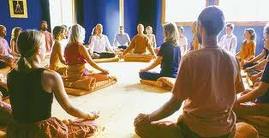

Advanced Yoga Studies

PRE-REGISTER for ALL ADVANCED STUDIES COURSES

Advanced Yoga Studies are courses for all adult yoga practitioners, yoga teachers and other professionals who feel that they would benefit from an in-depth study of various aspects of yoga from a physical, mental and spiritual perspective. Whether you have been teaching for years and feel like you need some new inspiration or you have just been practicing yoga for 6-months and have a significant interest in one or more areas of yoga practice, these courses are for you. Most of these courses are required for the 200-hour teacher training program and all of them carry continuing education credits that can be used to maintain your registration status with Yoga Alliance and other professional organizations. While these courses carry credits that are beneficial for yoga instructors, you do not need to be an instructor to benefit from this type of deep study of yoga. Please join us and explore what you have always known to be true—-life is yoga!

Foundations of Practice

Facilitated by Sharon Fennimore Rudyk, MA, E-RYT, R-PYT
Mondays from 5:30 to 8:30 pm
5/2/2011 through 5/23/2011

In this course, we explore the intellectual history of yoga through text, physical movement (asana) and the breath (pranayama). American yoga traditions will be presented within the context of their historical roots in India, Tibet and China. Each session will include experiential learning of yoga poses, breathing exercises and relaxation techniques. Learn the names of various yoga styles and the myths and stories that are behind the poses and the practices of yoga. This is a required course for the 200-hour teacher training program, but is open to students of all levels who want to explore the history of yoga, philosophical and ethical implications of yoga, four basic breathing exercises and 30-essential yoga poses. In each session, we will practice some breathing and yoga poses within the intellectual context of traditional Hatha yoga concepts and texts. This is a wonderful course for students who want to learn these aspects of yoga that are not generally covered in drop-in classes, for yoga instructors who want to review the foundations of practice and for adults who are interested in obtaining 200-hour registration with Yoga Alliance.

Shaking Hands with the Subtle Body

Facilitated by Sharon Fennimore Rudyk, MA, E-RYT, R-PYT
Fridays 6:00-8:30 pm
4/29/2011 through 5/20/2011

We will explore the answers to the following questions about the subtle body: What is the energetic body? Where are the chakras? What is a bandha? What is the relationship of the physical and energetic body in asana? How do different styles and traditions of yoga consider the energetic body? How can we use the breathe to change the quality of energy in the body? Sharon will draw on her training in Vajra Yoga and studies of Chinese and Tibetan yogas to introduce mutiple ways of thinking about and exercising the energetic body. This is the second required course in the 200-hour teacher training program, but everyone who is interested in exploring various aspects of the energetic body are welcome. It is suggested that all participants have a minimum of six-months of experience with yoga practice before taking this course.

Yoga of Intellect: Exploring Yoga Texts

Facilitated by Sharon Fennimore Rudyk, MA, E-RYT, R-PYT
Thursdays 5:30 to 8:00 pm
5/12/2011 through 5/19/2011

All adult yoga practitioners are welcome to take this course. We will explore various sections of Patanjali Yoga Sutras, Hatha Yoga Pradipika, Bhagavad Gita and other inspiring classical and contemporary texts. These texts not only provide a philosophical and ethical foundation for the practice of yoga and meditation, but they also inspire our most significant intentions through practice and living our yoga. Yoga is a path of transformation and these texts help ground our practice in the living intellectual and spiritual traditions that have come to inspire the American yoga tradition as we know it. We will also discuss how to apply our own religious and spiritual practices, traditions and texts to our yoga practice so that we can bring balance, in a very personal way, our mind/body/spirit on our mat and in the world.

Physical Body: Embodied Anatomy for Yoga

Facilitated by Sharon Fennimore Rudyk, MA, E-RYT, R-PYT
Fridays 10:00 am to 1:00 pm
5/6/2011 through 5/13/2011

This is a required course for the 200-hour teacher training certification course, but is open to all yoga practitioners, teachers and other professionals who want to explore the anatomy of yoga. The anatomy of yoga is different from the anatomy knowledges required for medical science and we incorporate what we know about the subtle body with the aspects of the physical body that are important for the physical postures. Specifically, we pay attention to the spine, shoulders, pelvis, knees and feet that are so important for safe alignment and also areas of the body that students generally have the most complaints with. We will also look at the endocrine system and discuss the specific impact of stress on the physical body and the role that yoga plays in relieving that stress.

Yoga of Teaching: Exquisite Tools for the Professional Instructor

Facilitated by Sharon Fennimore Rudyk, MA, E-RYT, R-PYT
Tuesdays 10:00 am to 3:00 pm
5/10/2011 through 5/13/2011

In this practical workshop we will cover the tools that all yoga instructors need to be professional and excellent from sequencing and planning classes to verbal cues for students to making physical adjustments to negotiating your pay and work agreements. This is a required course for Matrika’s 200-hour teacher training program, but all yoga instructors are welcome. You may have a little teaching experience and feel like you want a refresher or more support on these practical aspects of teaching or you may have been teaching for years and feel like you would benefit from some new inspiration. The more diverse our group in experience and yoga teaching styles, the more we will all benefit.