Tag: nature

Unicorn in the Sky and Other Magic

Hello there dear!  It’s Bibliotherapy Saturday  and I decided to start today’s exploration with a magazine I don’t usually read.  Ever.  I decided to start with February 2018 issue of Astronomy magazine.  Why you might ask?  Good question!  It’s because there was a hook on the cover that suggested that I could “TOUR Monoceros the Unicorn” on page 60.  I love unicorns.  How could I resist?  Monoceros the Unicorn is the 35th largest constellation out of the 88 constellations and the figure lies within the “Winter Triangle: the stars Sirius, Betelgeuse, and Procyon.”  The short article then has some pictures of and features of the area around the constellation and notes what is special that you can see either with the naked eye under a dark sky or what kind of telescopic enlargement is required.  This kind of night sky exploration is what I had been hoping for when I signed up for a basic astronomy class in college.  Instead, I got a whole lot of physics and math that I didn’t have the background to do and wasn’t sure what any of it meant.  I don’t know about you, but I feel kind of excited about this Unicorn dancing around the Winter Triangle of our night sky!   Recently, I have also come across a number of books and articles that refer to star bathing, which is just like sun bathing, but under the night sky.  While it may be difficult, or even impossible, in urban areas to isolate from other light sources, I have to believe that, with intention, one can go outside in the night to absorb the light of the stars and receive some of the benefits.  And, if those stars happen to be in the shape of a unicorn……..that HAS to be some extra special and nourishing star bathing.

When I was designing the curriculum for my new Buddhist meditation and nature focused yoga teacher training program, I felt called to pull ecospirituality into my yoga and meditation practice and work.  I also read an article in the November 2017-January 2018 Womankind magazine today called, “The Gardening Effect” by Lucy Treloar that quotes a biologist by the name of E.O. Wilson:

“…nature holds the key to our aesthetic, intellectual, cognitive and even spiritual satisfaction.”

Wow!  Go ahead and read that a few times and think about how much time you spend outdoors, about the quality of water and food that you consume and make a part of your body. I love an essay/memoir in this magazine by Katherine Scholes about her time as a child following her father, a physician, on his travels through Tanzania before independence when it was called Tanganyika.  The memoir is called “Home in the Open Savannah” and there are fabulous pictures of the author and her siblings as children.  In many of the pictures they are holding up dead birds with huge smiles on their faces.  I think of my children all stressed out about school schedules and homework packets and spending too much time on their iPads and how different their lives will be for not having had this kind of adventure in childhood that the author describes, but also how different they will be for having the ones that they are having.  Because, it’s all an adventure.

Also in this magazine, Womankind (11/17-01/18) on page 93, there is a Tanzanian proverb:

“A wise person will always find a way.”

This proverb is interesting to me, especially completely out of context, as it brings to mind my knowledge of the Tao….which is a certain kind of “way”.  Perhaps a wise person always finds a path to the flow of spirit?  Finds a way to a path, any path that will accept their feet and they walk it until the path unfolds and things seem more clear.  Or, maybe it is an invitation to the power of intention, that once we are determined, we relax around that determination so that we can be creative about how to manifest our desire?  It would be interesting to use this as a positive affirmation when I feel like something is impossible to remind myself that there is, in fact, a way.  There is always a way.

Here are some other books that made it to the reading pile:

Attracting Songbirds to Your Backyard
By Sally Roth

Did you know that some songbirds won’t ever consider a bird feeder, no matter how well-stocked, to be a food source?  This book is filled with interesting projects for making and providing food sources for song birds to diversify the birds that come and serenade you in your yard.  I also learned a lot about birds that are native to other places other than the Eastern parts of the USA where I am most familiar with bird populations.  Invite the birds to sing to you this spring and summer!

The Art of Stopping Time: Practical Mindfulness for Busy People
By Pedram Shojai

I like this meditation book a lot. There are lots of little tricks and exercises for finding ways to be mindful through your day.  I especially appreciated the suggestions on learning how to relax your neck, learning animal tracks, and taking five deep breaths every thirty-minutes throughout the day.  Sometimes, a little shift in attention can make a huge difference in your quality of life.  This book offers a lot of suggestions on how to make little shifts.

The State of Mind Called Beautiful
By Sayadaw U Pandita

Well, this is a vipassana meditation book with a very interesting name.  But, the perspectives and techniques offered are inspiring and a great way to either begin a personal meditation practice or to inspire and enhance an existing practice.  I find that this book has a very unique discussion on the challenges that come up during practice, such as pain in the body and a wandering mind.  The suggestions offered for working with obstacles within and around practice are very helpful and creative.

Flavor: The Science of Our Most Neglected Sense
By Bob Holmes

Just fascinating!  I’ve always thought that flavor and taste were synonyms, but, it turns out, they are not the same thing at all.  This is a very easy to read book and I found the discussion on what gives vegetables their flavor, or makes us believe them to have flavor, especially interesting.  It turns out that sometimes, what we taste as being a very sweet tomato isn’t sweet because of sugar content necessarily—its the hundreds of volatile aroma molecules.  And, cheap wine tastes better when people are told it is expensive even when, in a blind taste test, most will think the cheaper wines taste better anyway.  So, pour that $10 bottle of wine into a carafe and tell your guests it’s a $90 bottle of wine…..to enhance their enjoyment!

What’s in your reading pile this weekend?  Please comment below.
 

Forward Folds and Bending Over Backwards in Nature

The number one thing that adults say when I tell them that I am a yoga teacher is:

“Oh, I can’t do yoga!  I’m so inflexible and I can’t even get close to touching my toes.”

For about twenty-years now, I have tried every socially acceptable way possible at these moments to try to explain that yoga isn’t about being flexible, that anyone and everyone can benefit, that one may or may not become more flexible through yoga, that flexibility is, truly….besides the point entirely.  As soon as I start talking, I see the recipient’s eyes glaze over.  They are no longer paying attention to me, mostly because they only asked what I did for a living as a social pleasantry in the first place. Now, they are filled with regret for having ever made eye contact in the first place.  I can almost see the thoughts of escape to the cheese platter or, even better, the bar, cross their mind.

A couple weeks ago I was on a walk with a friend when t he concept of “tensegrity” came up in conversation.  (As an aside, you know you have a pretty wonderful friend when “tensegrity” just pops up in casual conversation.) It made me think about the relationship between tension and flexibility.  Every once in a while I will have a naturally flexible student.  Believe it or not, it is the most flexible students who struggle the most in yoga poses.  The lack of tension or pull to push against makes them feel floppy and un-centered.  It’s hard to focus when there is a lack of effort.  These students need to learn to engage muscles in a different way in order to feel into the shape of the pose and create sensation, effort, and release.  For the least flexible student, the evolution of a posture, simply by holding, exploring, and breathing, appears profound.

When I organize a yoga class plan, or a practice for myself, I try to make sure that, during the practice, we take our spines in all the directions it can go in: forward-back, forward fold, backbend, side bends, and twists.  It feels really beautiful to release tension around the spine and to unwind the habitual movements of the day through the practice of asana.  So many of us start to get stuck through our daily lives as we hunch over desks, lean into the back seats of cars to insert children (sometimes not willingly) into their car seats, and fail to remain curious and open to all the movements that are possible, even when they aren’t probable. If you watch a 6-month old baby, just put them down on the floor in front of you and see, for even five-minutes, you will see that they practice about five to ten recognizable asana during that time.  Yoga poses (asana) are natural for the human body.  These shapes and movements reflect our inherent desire to take ourselves in all the directions we can move in.  We can slither, slide, press, release, squease, lift, drop, shimmy, shake, hum, reach, collapse…….there are infinite movements available to us.  Just watch a video of Michael Jackson dancing and you will realize that it is likely you are only using about 20% or so of your human body capacity for movement.  Yoga asana are the natural movements and shapes of the human body.  Me, hunched over a desk all day?  There is absolutely nothing natural about that.

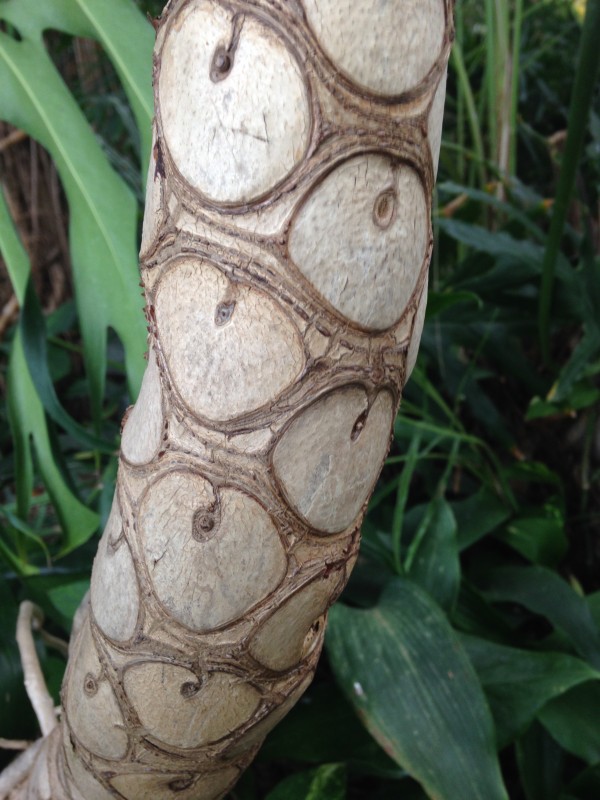
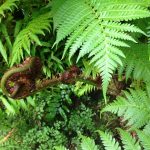
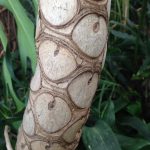
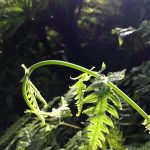
10-28-16-fall-continues-032In nature, there are many examples of trees and plants that bend.  Most obvious, of course, is heliotropism–movement towards the light.  But, if we look closely, we see that the cellular structures of plants and trees organize in circles, spirals, twists and forward folds and back bends in response to tension, gravity, and other forces.  Take, for example, the pattern on the trunk of this tree.  This intricate mapping of circles, swirls, and criss-crossings, is only possible because of the tension inherent in those spaces.  The inside of each enclosure maintains the integrity of the inside, while, at the same time, defining the space that is outside.

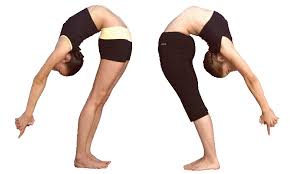
bikram-back-bendAny potter or architect will tell you that space is an important element of design.  Space is not synonymous with empty.  When you pick up a bowl, the space inside the curve represents the potential for holding.  It may, at that moment, be empty, but there is still space there.  Let’s say we fill that bowl with peppermint candies.  The space is filled with the candies, but it is still space.  When we practice yoga asana with this perspective in mind, we can get curious about the space that exists in our bodies and how to create more space.  What are the spaces that are empty?  Where are the crowded spaces?  What can be moved or re-distributed?  What are the solids providing something to push against?  Where are the natural bends and folds?  Look at the women in extreme back-bending postures.  These are extreme examples being used here not to suggest that your back-bend should look like this, but because these images invite us to examine the space around the body more easily.  Where is the space?  The space is actually beneath the spine.  While many of us refer to back bends as “heart-openers”, the anatomic reality of these shapes are that our hearts are pressed up into the chest cavity with the spine rising up to meet it.  The space underneath the spine is expanded and opened.

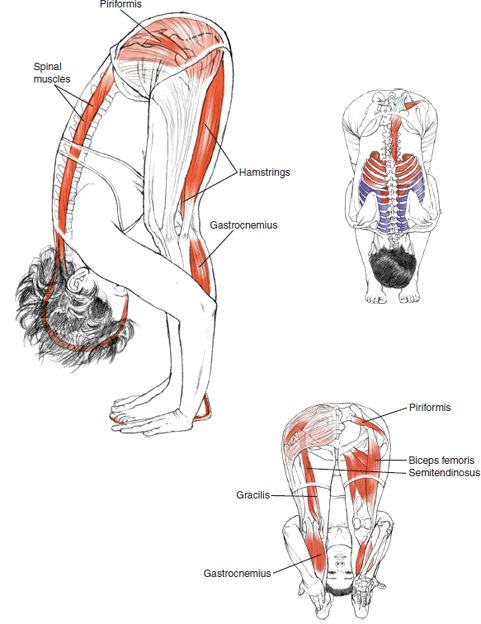
forward-foldIn a forward fold, the space for the heart expands and the spine rises above as it pulls back and away from the heart.  To give the heart the most room, we allow the spine to round, creating the space at the heart center.  We can breathe there, into the space, and feel the opening from the heart to our legs, and even further into the earth.  Experiment with this space you create in front of and behind the spine. Where does the space go when you release the yoga pose?  Actually, it is always there, but your shifting the contents of the space allows you to play with what is the container and what is contained.

I invite you to not only think about the shape that your fold or bend takes you in, but how the space around you shifts.  Explore these images of bends and folds in nature, not just the way that the shapes appear, but how the shape both creates and consumes space.  Whenever I guide students through savasana, the final relaxation at the close of most yoga classes, I always suggest that students release any tension that they might be holding in the space directly around their body.  It’s amazing how much release happens after that suggestion!

Written by Sharon Fennimore, a rogue anthropologist, yogini, and global doula based in Pittsburgh, Pennsylvania.