Category: General
Mittens
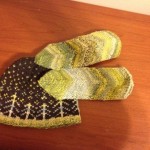
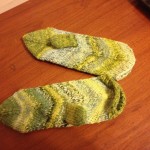
Today, my dear friend Cosy gifted me a pair of mittens that she knit for me. They are amazing. She is a simply genius fiber artist and the wool she used is her own handspun and uniquely dyed in the colors of an early spring woods. I am nothing short of in love with these duel jewels.
Then, tonight, as I was doing dishes, I noticed that it was snowing fast outside. Big flakes.
And, somehow, the combination of the quiet of the night, the fast and intense snowfall and having received mittens all brought me to a very special memory. I was home from college on a winter break. One night I went to a coffee shop on Forbes Avenue (that no longer exists) and I waited while a friend closed up after his shift at work. Although this was easily twenty-years ago (more?), I was brought back to the evening and the way that the bleach water from the mop filled the air with something stale while the smell of espresso beans hung in the atmosphere and the Rolling Stones were playing on the sound system. I was young. I was also incredibly in love.
After my friend closed up the coffee shop we walked together back to his house. It was freezing cold and there were huge snowflakes falling. I remember thinking to myself that the moment could not be any more perfect between my love, my youth, and the beauty of that snow falling. Now, you might be wondering where the mittens come in? You see, I was wearing mittens and I took off a mitten so that I could hold my friends’ hand. We walked in almost perfect silence, hand in hand, as the snow landed on our noses and foreheads and covered the top of our hats. Mittens. Snow. Love. It was so safe and so comfortable and the potential of the whole night just rolled out before us along that snowy urban path.
When I close my eyes and I wear my new mittens, far more beautiful mittens than those I wore in the memory, I can feel the beauty of that night. I can feel the presence of my dear friend and the energy of all the love I had in my heart for him. And, just for a moment, in this moment, I am that young woman with her dreams all exposed with the snow falling on her nose–vulnerable, safe, confident and mindful that even though the experience would pass that the memory would serve as a jewel-toned gem for the rest of her life.
And, it is.
Thanks for the walk in the snow and for holding my hand. Thanks for the beautiful mittens.
Animal Three: Squirrel
 Squirrels.
I only know of one contemporary profession of squirrel admiration and that is The Squirrel in Our Window website by KPF Digital about a little squirrel baby in his Brooklyn, NY window. One of the most hilarious books I’ve ever read was by Bill Adler called “Outwitting Squirrels”. But, in general, we watch these spectacular rodents run from one backyard to the next and never really wonder about the lives of the squirrels. One of my top ten favorite squirrels of all time is the one that plays the saxophone (or is it a pipe?) in George Harrison’s “I’ve Got My Mind Set on You Video”.
Sustainable Love: Metta Meditation
~Love note from Orson Welles to Rita Hayworth
Do you believe in love at first sight? Or, should I walk by again?
In Orson Welles note to his love, he suggests that he has fallen “tremendously in love” with her. The love he describes is not a pick-up line. Rather, it is the love that comes from knowing that your life is improved because this person is a part of it.
If you were a chicken, you would be impeccable.
Of course, most of us know that Rita Hayworth and Orson Welles marriage ended in divorce. Why isn’t really important (and, perhaps, none of our business really), but the whole picture helps us see thatthis incredible intensity of emotion is not necessarily sustainable.
What is sustainable?
If the very real and honest sentiments expressed by Orson Welles in his love note could not even sustain a five-year marriage, how are we to understand the love that he describes. This is the love that we all long for—is it not? We want to have the companionship of someone who understands us, who supports us and who sustains us through joy and sadness. We want someone who takes away the lonely and makes life feel well-lived regardless of outside circumstances. Essentially, we have somewhat selfish motives for our love. While Orson Welles love note was intended for Rita, the love expressed within it is all referenced to his own need for that love and the intensity of that love to sustain him.
In this post I offer you a more sustainable love. It is “metta” or “loving kindness.” The Pali word metta is a multi-significant term meaning loving-kindness, friendliness, goodwill, benevolence, fellowship, amity, concord, inoffensiveness and non-violence. The Pali commentators define metta as the strong wish for the welfare and happiness of others(parahita-parasukha-kamana). Essentially metta is an altruistic attitude of love and friendliness as distinguished from mere amiability based on self-interest. Through metta one refuses to be offensive and renounces bitterness, resentment and animosity of every kind, developing instead a mind of friendliness, accommodativeness and benevolence which seeks the well-being and happiness of others. True metta is devoid of self-interest. It evokes within a warm-hearted feeling of fellowship, sympathy and love, which grows boundless with practice and overcomes all social, religious, racial, political and economic barriers. Metta is indeed a universal, unselfish and all-embracing love. (SOURCE)
Practicing “metta” or loving-kindness meditation is a sustainable form of love because it is completely unselfish. It is an honest wish for the happiness and well-being of all living beings—friends, family, enemies, hippoes and moose and ants and your cousin’s roommate. Not only is this a sustainable love, the expression of metta and the development of the skills of compassion represent a path to lasting joy.
How do you begin a metta practice?
The first place to start is what I would like to offer you in today’s love note. You start by being compassionate with yourself.
STEP ONE: CENTER with 10 Deep and Mindful Breaths
Take 10 deep breaths counting the exhalation and not the inhalation. This may be more difficult than it first seemed when reading the instructions, so just be patient with yourself and do your very best. Inhale to prepare and then EXHALE slowly (1) and inhale deeply and then EXHALE slowly (2) and inhale deeply and EXHALE slowly (3) and inhale deeply…….you’ve got it! Give yourself a maximum of 2-minutes to count 10-breaths. If your mind wanders or you lose count or you keep on counting inhalations instead of exhalations, just take a deep breath in and count ONE again on your next exhalation. Keep going back to ONE until your two minutes are up or you’ve reached a count of ten.
STEP TWO: Relax your whole body
You don’t have to go change into your special yoga outfit or sit on the floor or roll out your mat or dust off your meditation cushion. Right where you are, as you read this, relax your body. And, before you skip off to step three, I assure you that you aren’t quite relaxed enough! So, start with your feet, map your whole body from feet to head and notice sensation and let your body become heavy and relaxed part by part. Feet are relaxed, legs, hips, belly, low back, middle back, ribs, chest, heart, upper back, shoulders, arms, hands, neck, throat, jaw, mouth, face, head—-whole body relaxed.
STEP THREE: Make a Wish
Make a wish that your whole body is HAPPY, HEALTHY and FREE of SUFFERING. Make a wish that your whole body is PEACE.
Feel the vibration of this most honest wish in every cell of your body.
More Metta
If we were to continue this loving kindness meditation, we would then extend this same wish to your family, friends, neighbors, all human beings, and all living beings……but for today, I just want you to give yourself a little metta.
Please try this little meditation and comment below on the BLOG about your experience. I know you’ve felt the great passion that Orson Welles expressed for Rita Hayworth for someone in your life, but how does it feel to cultivate this complete acceptance and sustainable love for yourself? How is this different? What is the same?
Really? You really want even more metta?
Of course you do! Explore more Buddhist philosophy and meditation techniques in my book club style course, Four Noble Truths.
Flora Two: Dandelion Magic

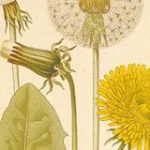
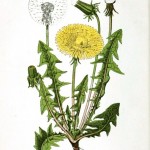
Yesterday, I wrote a post about sparrows. Today, a little reminder about the wonders of the dandelion.
Even as an adult, there are few things that delight me as much as making wishes on a perfect globe of dandelion seeds. I can’t help myself. Taking a deep breath I feel so connected to my wish and then sending it off into the prana of the Universe on the vehicle of tiny seeds that were mothered by bright yellow flowers—it’s just magic. What so many desire to kill with their toxins purchased from Lowe’s, I spread with my wishes.
According to this blog post by Charlie Pulsipher, there are eleven amazing benefits that we can experience:
Digestive Aid – Dandelion acts as a mild laxative that promotes digestion, stimulates appetite, and balances the natural and beneficial bacteria in the intestines.
Kidney – This weed-like superfood is a diuretic that helps the kidneys clear out waste, salt, and excess water. This inhibits microbial growth in the urinary system too.
Liver – Dandelion has been shown to improve liver function by removing toxins and reestablishing hydration and electrolyte balance.
Antioxidants – Every part of the dandelion plant is rich in antioxidants that prevent free-radical damage to cells and DNA, slowing down the aging process in our cells.
Cancer – Dandelion acts against cancer to slow its growth and prevent its spread. The leaves are especially rich in the antioxidants and phytonutrients that combat cancer.
Diabetes – Recent animal studies show promise that dandelion helps regulate blood sugar and insulin levels.
High Blood Pressure – As a diuretic dandelion increases urination which then lowers blood pressure. The fiber and potassium in dandelion also regulate blood pressure.
Cholesterol – Animal studies have shown that dandelion lowers and control cholesterol levels.
Gallbladder – Dandelion increases bile production and reduces inflammation to help with gallbladder problems and blockages.
Inflammation – Dandelion contains essential fatty acids and phytonutrients that reduce inflammation throughout the body. This can relieve pain and swelling.
Immune System – Animal studies also show that dandelion boosts immune function and fights off microbes and fungi.
Poems About Dandelions
The Dandelion’s pallid tube
Emily Dickinson
The Dandelion’s pallid tube
Astonishes the Grass,
And Winter instantly becomes
An infinite Alas –
The tube uplifts a signal Bud
And then a shouting Flower, –
The Proclamation of the Suns
That sepulture is o’er.
The First Dandelion
Walt Whitman
Simple and fresh and fair from winter’s close emerging,
As if no artifice of fashion, business, politics, had ever been,
Forth from its sunny nook of shelter’d grass–innocent, golden, calm
as the dawn,
The spring’s first dandelion shows its trustful face.
From “A Rhapsody” (excerpt)
John Clare
Tis May; and yet the March flower Dandelion
Is still in bloom among the emerald grass,
Shining like guineas with the sun’s warm eye on–
We almost think they are gold as we pass,
Or fallen stars in a green sea of grass.
They shine in fields, or waste grounds near the town.
They closed like painter’s brush when even was.
At length they turn to nothing else but down,
While the rude winds blow off each shadowy crown
Bird One: What the Saxophonist Noticed
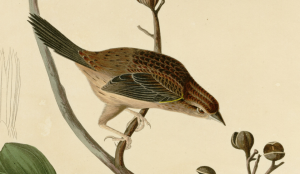
When I was living in New York, I went out once on an internet date with a man who told me about the sparrows that lived in the hallows of the pipes that made up the traffic lights in his neighborhood. For some reason I felt drawn to learn more about these little birds that were so much a part of my urban habitat. It’s like this everywhere. Many of us feel called to protect the earth, but we have very little knowledge of the life in front of us. I am going to start a series of inquiries about birds and plants that we take for granted and start with a sparrow as a way of connecting with this interest that was sparked a long time ago by a stranger who noticed such things.
In 1850, eight pairs of English sparrow were set free in Brooklyn, NY to combat cankerworms (aka. inchworms). The inchworms were ruining fruit orchards. The ultimate irony is that the sparrows loved to eat fruit buds even more than cankerworms!
Every sparrow you see today is from one of these original 16-sparrows.
Sparrow Weavers, native to Eurasia and Africa, build domed nests. Both sexes care for the eggs and later the young.
Melospiza Meodia, the Song Sparrow, seeks food by scratching away at the ground litter with both feet simultaneously doing a backward jump.
SPARROW QUOTES
The sparrow that is twittering on the edge of my balcony is calling up to me this moment a world of memories that reach over half my lifetime, and a world of hope that stretches farther than any flight of sparrows.
Donald G. Mitchell
Tell me not of joy: there’s none Now my little sparrow’s gone; He, just as you, Would toy and woo, He would chirp and flatter me, He would hang the wing awhile, Till at length he saw me smile, Lord! how sullen he would be!
William Cartwright
Sparrows who emulate peacocks are likely to break a thigh.
Burmese Proverb
History of the House Sparrow by Steve Eno
Urban Bird Information/Stanford University
Life of Birds (PBS) and Evolution
Posted by Sharon Fennimore, a rogue anthropologist, mind body coach and yoga instructor who is an urban naturalist at heart and believes we can only love the whole earth by expressing adoration and awareness for the life we experience each and every day.
Make 2014 Awesome!
Lost
I have been seriously lost twice in my life.
The first time, I was in Macy’s after soon after the end of the Christmas season with my mother and my younger sister. I was a child. My sister was even more of a child. I somehow convinced my mother to allow me to take the escalator up to the book and toy store that was set up outside of Santa Land during the holiday season. She let me take my little sister with me. Unfortunately, when I got up there to the space where the book and toy store was, it was no more. It was a seasonal retail area that had been taken down. I did what any responsible and rational child would do, I walked with my sister to the bottom of the escalator and we stood together and waited. A number of security guards with walky-talkies stopped and asked me if we were lost and I emphatically said “NO”. I insisted, as a matter of fact, that my mother was going to come up that very same escalator momentarily. I wasn’t about to tell some stranger I was lost! My mother had shared with me a secret password that anyone who she had told to pick me up if I was ever expecting her and she couldn’t come and get me and told me never to go with anyone who didn’t know that password. None of these security guards were revealing the password. I wasn’t going to budge. I was going to grow old with my sister at the bottom of that escalator.
Eventually, a security guard who seemed to offer legitimate information regarding my mother came to us and I revealed that, in fact, we’d been waiting an awfully long time and perhaps we were lost after all. They took us to the security offices where my mother was waiting.
The second time, I was in a window-less room with some brilliant scholars. To make a long story short, they started shouting at one another. They were trying to determine, apparently during my scheduled 10-minute oral defense of my qualifying exams for my Ph.D, what exactly was Anthropology and, was I or was I not an Anthropologist. An hour and a half later, the topic of Anthropology remained undefined. They were able to agree that whatever the definition was, I wasn’t one—-I wasn’t an Anthropologist. I entered the windowless room an Anthropologist. I left not an Anthropologist. And, somewhere in that time and space I got lost. Really lost.
The first time I was lost I was physically lost. I became disconnected from the one person who connected me geographically between the space where I was and my home.
The second time I got lost, I was spiritually lost. I became disconnected from the one person who connected me to the time and space and experiences from before I was an Anthropologist to the time when I became an Anthropologist—myself.
In both experiences, I made it home. My sister was with me on both occasions. On the first occasion she remained with me steadfast and true. Never once did she fail to backup my story that we weren’t lost. She never cried and she kept complete confidence that I was in charge and making the right decisions. On the second occasion she remained with me steadfast and true. Never once did she believe I was lost. Instead, she created a different tale in which I was a shape changer and she suggested that my powerful ability to be good at so many things was threatening to many, but that I must remain true to my shape changing ways.
Whenever I feel destroyed, and, lately, this happens to be how I feel multiple times in despicable minutes that stretch through hours and days, I recall the times I was lost. In both situations I remained still, but the geography shifted around me in unpredictable ways. I knew where I was. I knew who I was. But, the space changed and the terminology shifted and people behaved in ways I didn’t expect that surprised and shocked me. In both situations I didn’t see how I was going to get back home. The day I became a not-Anthropologist I didn’t become something else. I just wasn’t.
In Buddhism, we practice non-attachment. It is very hard to practice this with our belongings and with the people and places we love. But, we can fantasize and pretend that we aren’t attached and even this pretending is helpful. Even for a few minutes in meditation we can experience a feeling of freedom and liberation from all this STUFF. What a relief! But, non-attachment to self is a tricky one. In 2006, His Holiness the Dalai Lama published a book titled, “How to See Yourself As You Really Are.” Almost every year since its publication I have attempted to read it. I don’t understand it. But, from my minimum understanding, what I get from this book is that I don’t exist. You don’t exist either.
As Chandrakirti said, “Yogis refute their own inherent existence.” (HH Dalai Lama, pg. 41)
Macy’s doesn’t exist, nor did the escalator and the fact that I thought that there was a book and toy store somewhere was a complete fabrication too. Anthropology doesn’t exist either. Those brilliant scholars and the room and the tables and the lack of light and air due to the windows that weren’t there even in my imagination—none of that exists either. These memories of mine are truly figments of time and are shaped and re-shaped by my current understanding and the choices I have made before, during and after.
“The fact that things change from moment to moment opens up the possibility for positive development. If situations did not change, they would forever retain their aspect of suffering. Once you realize things are always changing, if you are passing through a difficult period you can find comfort in knowing that the situation will not remain that way forever (HH Dalai Lama, pg. 212).”
As Buddha says in the Diamond Cutter Sutra (quoted by HH Dalai Lama, pg. 213):
View things compounded from causes
To be like twinkling stars, figments seen with an eye disease.
The flickering light of a butter-lamp, magical illusions,
Dew, bubbles, dreams, lightning, and clouds.
I have memorized the last line of this part of the sutra and I repeat it like a mantra when I feel destroyed and overwhelmed:
Dew, bubbles, dreams, lightning, and clouds.
Dew, bubbles, dreams, lighting, and clouds.
Dew, bubbles, dreams, lighting, and clouds.
Because, when I am in the thick of feeling destroyed and lost and like all hope has taken a one way travel ticket around the world without enough cash for a return flight, it is a little reminder—-it’s changing. It’s all changing right now. I don’t know what is changing or how or what things will feel like on the other side, but it won’t be like this.
I support this mantra with a brilliant memory that was facilitated by a counselor, Dave Stein, at a summer camp that I attended as a child. One night on a camp-out, he marched us all out into a dewy wet field and told us to lie down in the grass. Then, he told us to be quiet and listen and to feel everything—-the wet grass, the way that the air smelled, the moon and stars in the sky—EVERYTHING. And he said that we would never forget that moment. That was about 30-years ago. He was right. I haven’t forgotten it. The experience of shaking up the normal routine. The walk to the field in the dark. How magical and special it felt to be outside, late, with everyone there also listening so closely and feeling the wet grass poke into shorts and t-shirts and watching the sky move above us.
Dew, bubbles, dreams, lightning, and clouds.
Dew, bubbles, dreams, lightning, and clouds.
Written by Sharon Fennimore Rudyk, a rogue Anthropologist and yogini offering mind-body coaching services including yoga, meditation and visualization through online courses in mindfulness, Buddhist philosophy and meditation techniques and teacher training programs. Based in Pittsburgh, Sharon harnesses the power of the internet to bring her teachings to you wherever you are.
REFERENCE
His Holiness the Dalai Lama
How to See Yourself As You Really Are (2006), Atria Books
Winter Moon
There is such a bright winter moon out tonight, just a bare sliver of a crescent, but so incredibly bright and cold, that I was inspired to find a translation of one of my favorite Han Dynasty poems.
N0.17
First Month of Winter: Cold Air Comes
First month of winter: cold air comes,
north winds sharp and cruel.
I have many sorrows, I know how long the night is,
looking up to watch the teeming ranks of stars.
Night of the fifteenth: a bright moon full;
twentieth night: toad and hare wane.*
A traveler came from far away,
put a letter into my hand;
at the top it spoke of “undying remembrance,”
at the bottom, of “parting long endured.”
I tucked it away inside my robe;
three years — not a word has dimmed.
With whole heart I offer my poor love,
fearful you may not see its worth.
* The dark and light areas on the surface of the moon were interpreted as the outlines of a toad and a hare who inhabit the moon.
Looking for a mindfulness meditation course that you can complete online? Learn ways to relieve stress at any time and any place. Course is 50% off now through January 2, 2014!
A Mindful Month
A Mindful Month
A month-long online course exploring the senses of taste, balance, touch and smell
DISCOUNTED 50% from now until January 2, 2014! JUST $25!
This is a one-month online meditation program using our senses of taste, balance, touch and smell as the foundations for an exploration of mindfulness.
Through tiny acts of courageous mindfulness using your sense of taste, balance, touch and smell, you will deeply and sensuously experience exquisite moments of bliss through the month of November. Just like secretly devouring an entire box of chocolates all by yourself. Except, your pants will still fit at the end of the month.
You know this is for you if you:
-
have a body
Yes, in all honesty, that is the only requirement. You don’t have to believe in chakras and rainbows. You don’t need any special clothing. In fact, some of the practices are clothing optional! Your size, shape, health, fitness level, abilities, disabilities, education and previous experience with meditation or yoga or just about anything has absolutely nothing to do with this experience. If you have a body and you have breath moving in and out of your body, then this course will meet you where you are and then raise you one. All you need is less than 5-minutes a day!
Learning basic mindfulness techniques that you can practice at any time and in any place is a beautiful way to create a sense of peace, joy and wellness in your life. The practices will bring you fully into this moment. When we are in the present moment, the power of the past and fears of the future fade and provide us with respite and relief. If you already have a regular meditation practice, then these practices will help refresh, inspire and empower your practice.
What do you get?
Week One: TASTE
Week Two: BALANCE
Week Three: TOUCH
Week Four: SMELL
Each week includes three mindfulness exercises using the sense of the week that take five minutes or less to practice. You will also receive one unique ten-minute audio guided meditation for each of the senses that you can either listen to on the web or download as an MP3 to keep forever and use to practice meditation on your own. At the end of the course you will be able to download a PDF booklet of all 12-mindfulness exercises to keep as a reference.
That’s a total of twelve 5-minute mini-meditations and four 10-minute audio guide meditations. You can try them all or just find one you love and keep on practicing. There are no goals, objectives, assignments, grades or tests.
BONUS
You will also receive a twenty-minute whole body relaxation. This is your emergency stress Rx for when you feel exhausted, stressed-out and anxious. Just play this MP3 and zen out. This bonus is available to listen to on the web or you can download the MP3 and listen anytime you need a little rest and relaxation.
BENEFITS of MEDITATION
Learning how to add meditation practices to each and every day of your life has significant positive health benefits. As a matter of fact, I’m willing to put it out there that a minimal investment in practicing meditation may be the most important thing you do for your health and well being in your entire lifetime. My online courses are designed to help everyone have access to these tremendous benefits. There is a misunderstanding that you have to meditate for hours a day or be able to sit still or twist into a pretzle or shave your head and start being intimate with incense in order to gain the benefits.
This is simply not true!
You can benefit from a daily meditation practice that works with your current lifestyle, career and haircut. As a matter of fact, the amount of money you invest in learning how to make meditation a part of your daily life may save you literally thousands of dollars in medicine and services required to heal from the damage of a lifetime of stress. You are never too old or too young. The benefits are both immediate and lasting.
Changes your body’s response to stress so that it is less harmful.
Lower cardiovascular risk factors such as cholesterol levels, blood sugar, and stress hormones
Helps adults with irregular heart rhythm
Change the expression of your genes (yes, you read that correctly—change your genes!)
BONUS
You will also receive a twenty-minute whole body relaxation. This is your emergency stress Rx for when you feel exhausted, stressed-out and anxious. Just play this MP3 and zen out.
REGISTER NOW $50 ($25 until January 2, 2014)
BE CALM